
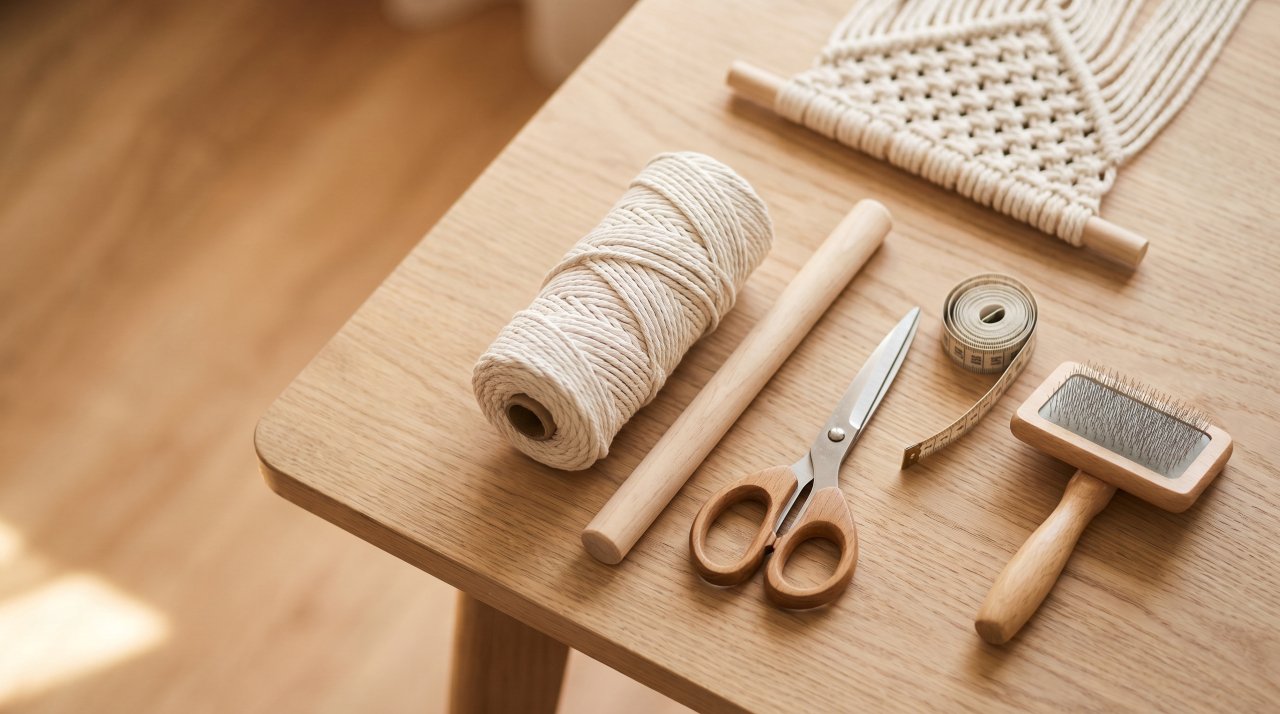
Did you know that macrame has seen a 400% search interest increase over the past decade, making it one of the fastest-growing fiber crafts in the US? If you’ve been curious about it, you’re in good company.
Getting started with macrame is genuinely easier than most people think. The supplies list is short, the tools are simple, and you don’t need a dedicated craft room or a big budget. What you DO need is a clear picture of what actually matters — and what’s just noise.
This guide covers every macrame supply for beginners you’ll want to know about. You’ll learn what each item does, why it helps, what thickness of cord to start with, and how to avoid the common trap of buying too much, too soon. By the end, you’ll feel confident heading to a craft store or shopping online — without second-guessing every choice.
What Makes Macrame So Beginner-Friendly?
Macrame is one of the few crafts where your hands are your main tool. You don’t need a sewing machine, a loom, or any electricity. According to the Craft Yarn Council, fiber crafts like macrame consistently rank among the top hobby choices for US adults — partly because the startup cost is so low.
Most beginners can start their first project with four to six items. That’s it. You don’t need a full studio setup, and you definitely don’t need to spend $100 before you’ve tied your first knot.
The real challenge isn’t finding supplies — it’s knowing which ones are worth your money at the start.
The Core Macrame Supplies for Beginners
1. Macrame Cord — Your Most Important Choice
Cord is everything in macrame. It’s the material you’ll work with on every single project, so it’s worth taking a moment to pick the right one.
Cotton cord is the best starting point for beginners. If you want a deeper look at which cord to buy first, we break it all down for wall hangings specifically. It’s soft on your hands, easy to knot, and holds its shape well. Natural cotton also looks beautiful in finished pieces — which matters when you’re making your first wall hanging or plant hanger.
Avoid nylon or polyester cord when you’re starting out. Synthetic cords are slippery, harder to knot tightly, and don’t give you the same textured, fluffy finish when you brush them out. They have their place, but that place is not your first project.
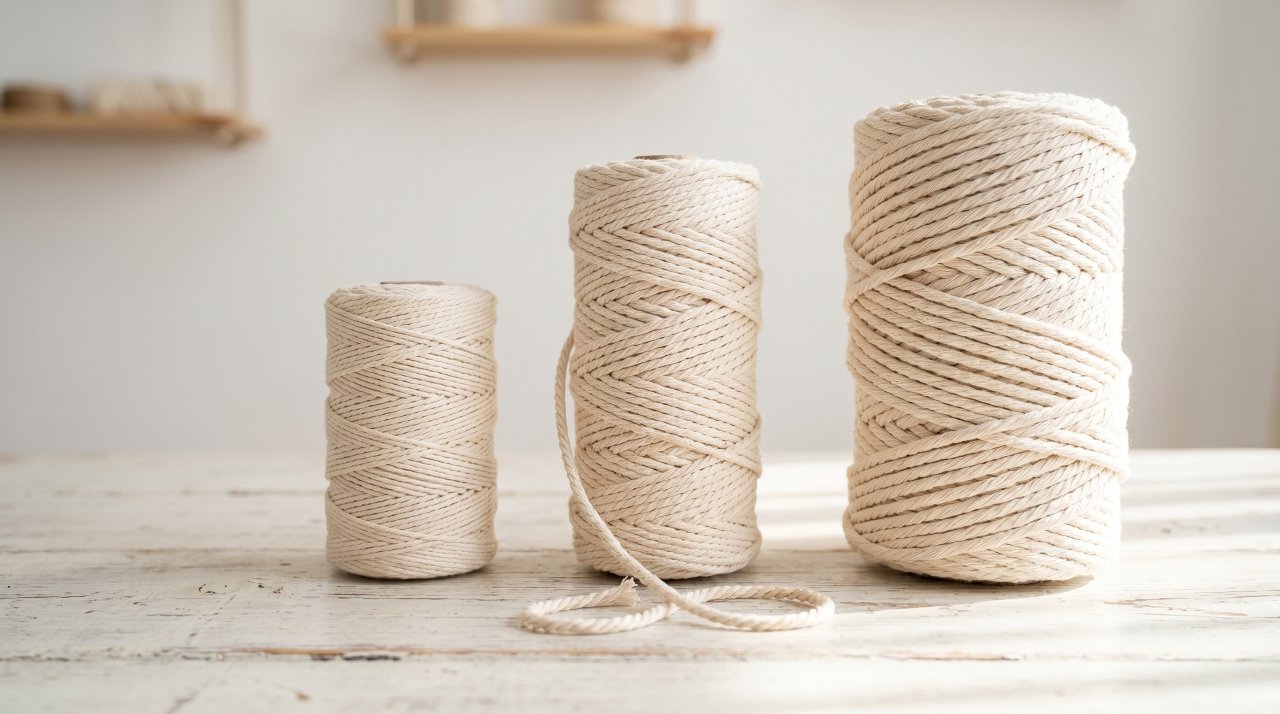
Cord thickness matters more than most beginners realize. Here’s a simple guide:
| Project Type | Recommended Cord Thickness |
|---|---|
| Wall hangings | 3mm – 5mm |
| Plant hangers | 3mm – 5mm |
| Keychains / small décor | 1mm – 3mm |
| Bags and baskets | 5mm – 8mm |
| Jewelry | 0.5mm – 1mm |
For your very first project — which should probably be a small wall hanging — grab a 3mm or 4mm single-strand cotton cord. You’ll have enough control over it to learn knots properly, and it’s widely available at stores like Hobby Lobby, Michaels, or online.
A 100-yard spool of 3mm cotton cord typically costs between $8 and $15, depending on the brand. That’s enough cord for a small beginner wall hanging with plenty left over.
2. A Dowel, Driftwood, or Hanging Rod
You need something to attach your cord to. For most beginner macrame projects, this is a wooden dowel or a piece of driftwood.
Wooden dowels are the easiest option. You can find them at any hardware store or craft store, and they’re inexpensive — usually $1 to $3 for a standard length. Choose a dowel that’s slightly wider than your planned project width.
Driftwood gives a more natural, boho look and it’s free if you live near a beach or river. Just let it dry completely before using it. Many beginners prefer driftwood because it adds character you simply can’t buy.
A 12-inch dowel works well for your first wall hanging. Don’t overthink this one.
3. Sharp Scissors
You’ll cut a lot of cord. A decent pair of sharp scissors makes every cut cleaner and saves you from fraying frustration. Dull scissors crush cotton fibers instead of cutting them, which makes your work look rough.
You don’t need fancy fabric scissors. Any sharp pair will work — even a decent kitchen scissors you dedicate to crafts. If you’re buying specifically for macrame, Fiskars craft scissors are a reliable, affordable choice that most beginners love.
Budget around $8 to $15 for a good pair. This is one item where spending a tiny bit more upfront saves you a lot of annoyance later.
4. A Tape Measure or Ruler
Macrame projects require you to cut cord to specific lengths before you start knotting. A tape measure lets you do this accurately. Most patterns tell you to cut cords at 4x or 5x the finished length of your project — so a little measuring goes a long way.
You probably already have a tape measure at home. If not, a basic 60-inch fabric tape measure costs about $2 to $5 and works perfectly.
5. A Comb or Pet Brush (For Fringe)
This one surprises most beginners. A wide-tooth comb or a stiff pet brush is what you use to brush out cord ends into that beautiful fluffy fringe you see on finished macrame pieces.
A regular hair comb works in a pinch, but a pet slicker brush does the job faster and more evenly. You can find one for $5 to $10 at any pet supply store. It sounds odd, but every experienced macrame maker swears by it.
6. An S-Hook or Hanging Rail (Optional but Helpful)
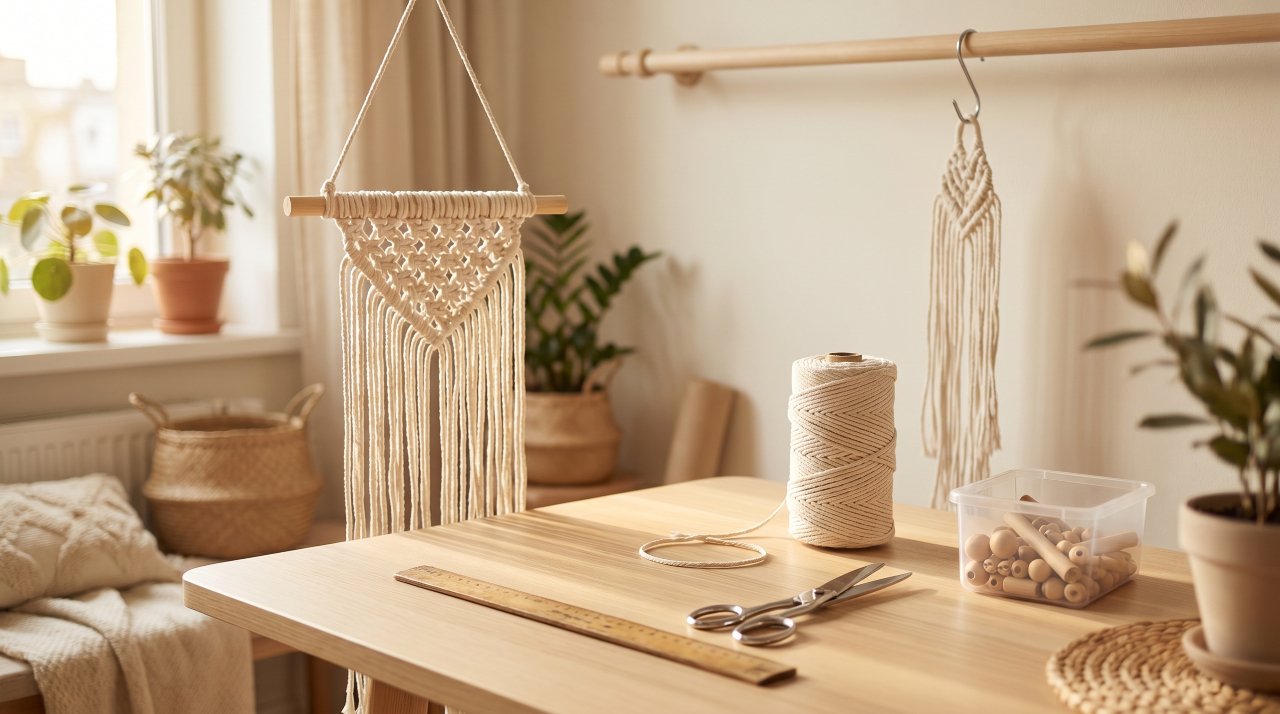
Working on a flat table is possible, but most macrame projects are easier to make when they hang vertically. An S-hook lets you hang your work from a curtain rod, door frame, or clothing rack while you knot.
This is optional for your very first project, but once you make one or two pieces, you’ll want this setup. S-hooks cost about $2 to $5 for a pack.
What NOT to Buy as a Beginner
This section is something most guides skip — and it’s genuinely important. Buying the wrong things slows you down and wastes money.
Skip these when you’re starting out:
- Jute cord — It’s scratchy, rough on hands, and harder to work with than cotton. Save it for later projects.
- Very thin cord (under 1mm) — Tiny cord makes tiny knots that are hard to see and correct when you’re learning. Start thicker.
- Pre-made starter kits from unknown brands — Many cheap kits include low-quality cord that tangles easily or breaks. Buy cord separately so you control the quality.
- Bobbins and cord winders — You don’t need these yet. They’re helpful for big projects, but not for your first wall hanging.
- Ring attachments (metal rings) — Fun for plant hangers, but not necessary for a first project. Learn the knots first, add accessories later.
Keeping your supply list short actually helps you learn faster. Fewer items means fewer distractions.
How Much Does It Cost to Start Macrame?
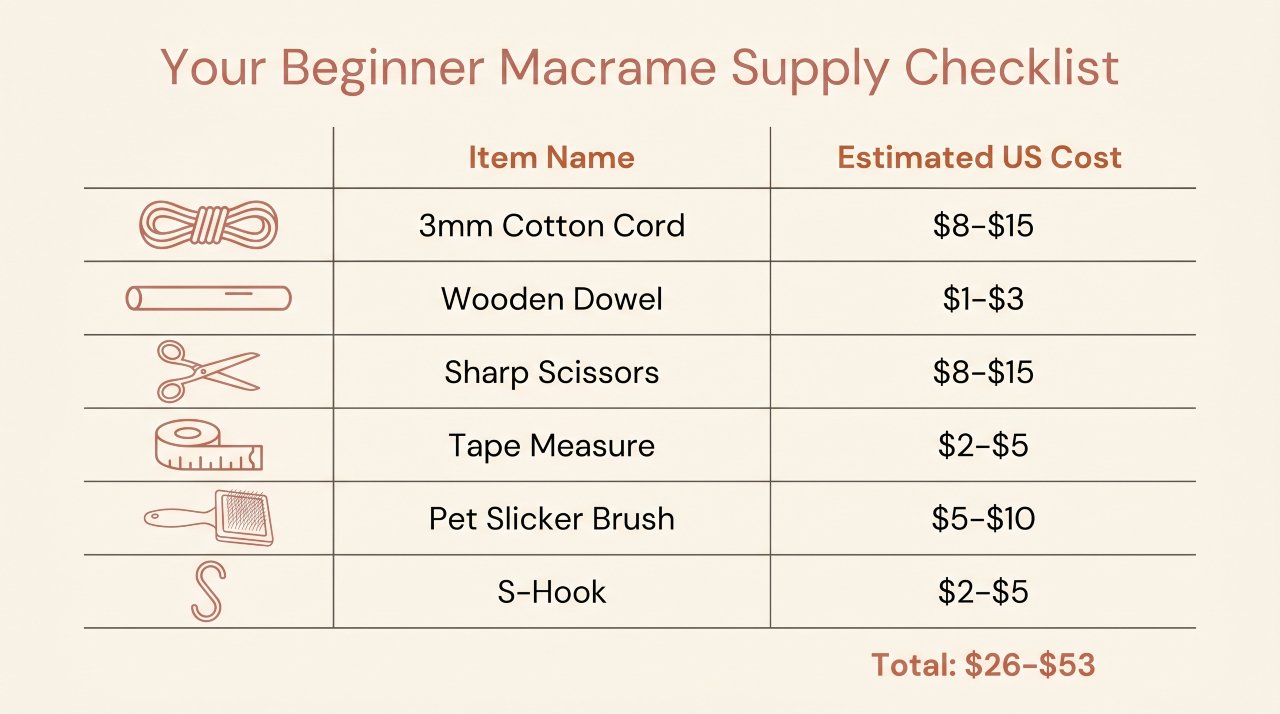
Honestly, less than most people expect. Here’s a realistic breakdown for a US beginner:
- Cotton cord (100 yards, 3mm): $8–$15
- Wooden dowel: $1–$3
- Sharp scissors (if you need new ones): $8–$15
- Tape measure (if you need one): $2–$5
- Pet slicker brush for fringe: $5–$10
- S-hook: $2–$5
Total realistic startup cost: $26–$53
That’s it. Many beginners already own scissors and a tape measure, which brings the real cost even lower. You can start macrame for under $30 if you shop smart.
Where to Buy Macrame Supplies in the US
You have good options, both in-store and online.
In-store: Hobby Lobby, Michaels, and Joann Fabrics all carry macrame cord and dowels. Hobby Lobby usually has the widest cord selection. Hardware stores like Home Depot or Lowe’s carry wooden dowels for a fraction of the craft store price.
Online: Amazon and Etsy both carry good cord. On Etsy, you can often find small makers selling high-quality cotton cord in curated colors. BOCHIKNOT macrame is a well-regarded supplier with beginner-friendly options and helpful guides on their site.
Check for Hobby Lobby’s weekly 40% off coupon if you’re buying in-store — it applies to single regularly priced items and can significantly reduce your cord cost.
How to Store Your Macrame Supplies
Nobody talks about this, but messy supplies kill your motivation fast. A few simple storage habits make a big difference.
Keep your cord on its original spool or wrap it into a loose ball to prevent tangling. Store supplies in a clear plastic bin or a dedicated craft bag so you can see everything at a glance. Hang your scissors on a small hook nearby so they don’t get buried.
If you have multiple cord colors or thicknesses, use binder clips or rubber bands to label each one. Small habits like these make sitting down to create feel easy rather than frustrating.
Pair Your Supplies to Your First Project
Here’s something no other beginner guide tells you: matching your supplies to a specific first project helps you learn faster. Instead of buying cord “in general,” buy cord for one project.
A beginner wall hanging using a simple square knot pattern is the perfect first project. You’ll need about 40–50 yards of 3mm cotton cord, a 12-inch dowel, scissors, and a tape measure. That’s all.
Once you finish that first piece — even if it’s imperfect — you’ll know exactly what you enjoy, what you want to improve, and what supplies to buy next. Learning through making is always faster than learning through reading alone.
FAQ: Macrame Supplies for Beginners
What do I need to start macrame for beginners?
You need macrame cord (3mm–4mm cotton is best), a wooden dowel or driftwood, sharp scissors, and a tape measure. A comb or pet brush helps with finishing. That’s genuinely all you need to start your first project.
What is the best cord for macrame beginners?
Single-strand or 3-ply cotton cord in 3mm or 4mm thickness is the best choice for beginners. It’s soft, easy to knot, widely available, and gives you the classic macrame look. Avoid synthetic cords and very thin cord until you’ve got a few projects under your belt.
What thickness of macrame cord should a beginner use?
Start with 3mm or 4mm cord for wall hangings and plant hangers. Thicker cord (5mm+) is harder to control when you’re learning knots, and thinner cord (under 2mm) makes it difficult to see your knot structure clearly. The 3mm–4mm range hits the sweet spot for beginners.
How much does it cost to start macrame?
A realistic US beginner budget is $26 to $53 for everything you need. Many beginners already own scissors and a tape measure, so the actual out-of-pocket cost can be as low as $15 to $20 for cord and a dowel. Macrame is one of the most affordable fiber crafts you can pick up.
Do you need special tools for macrame?
No special tools are required. Your hands do most of the work. The only “tools” you really need are sharp scissors and a tape measure — both of which most people already own. Everything else is either the cord itself or something to attach it to (like a dowel).
Can you learn macrame on your own?
Yes, absolutely. Macrame is well-documented online through YouTube tutorials, blogs, and pattern shops on Etsy. Many beginners teach themselves completely without a class. Starting with a simple square knot wall hanging gives you a solid foundation for all future projects.
Your Next Step Starts Today
The single most important thing to take away from this guide: keep it simple. One type of cord. One dowel. Sharp scissors. A tape measure. That’s your starting lineup.
You don’t need a perfect setup to start — you need a good-enough setup and the willingness to make something. Your first piece won’t be perfect, and that’s completely fine. Every skilled macrame maker started with a lumpy, uneven wall hanging they were secretly proud of anyway.
Macrame is waiting for you — and it’s a lot friendlier than it looks.

