
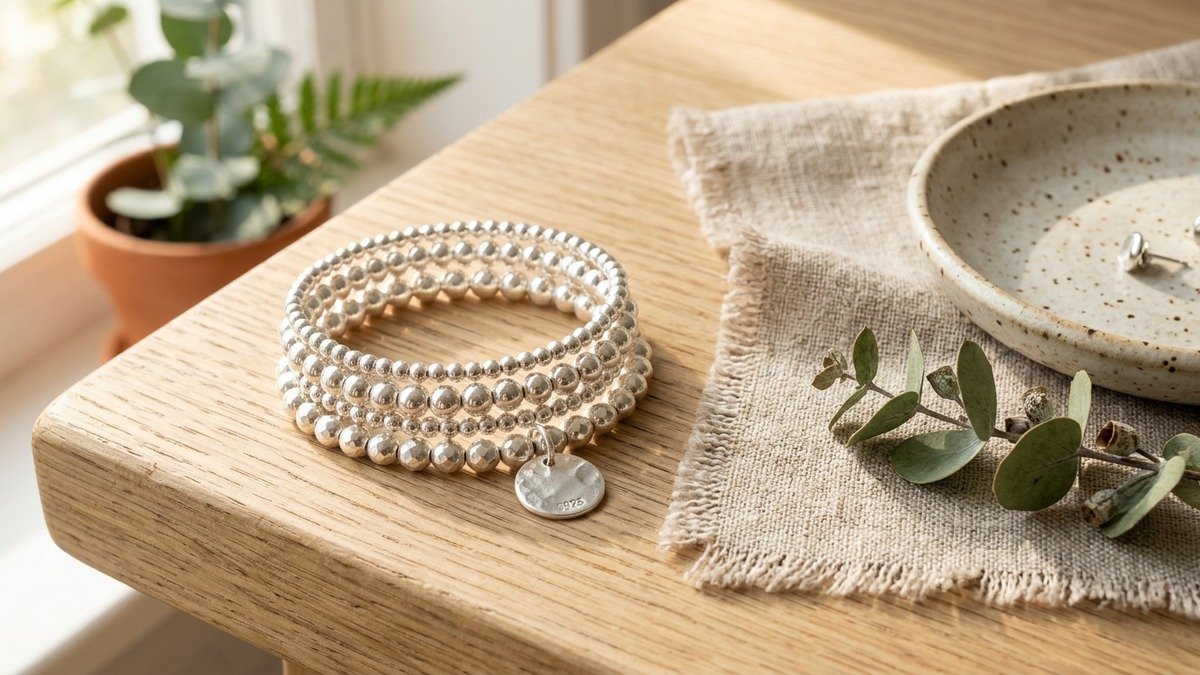
Quick Answer: How to Make a Durable Silver Beaded Bracelet
To create a professional, long-lasting silver beaded bracelet, use genuine 925 sterling silver seamless round beads strung on 0.7mm Beadalon Stretch Magic elastic cord. Pre-stretch your cord vigorously three to four times before stringing to eliminate future slack. Calculate your bracelet length by measuring your exact wrist circumference and adding 0.5 inches for a classic fitted drape. Secure the ends using a double surgeon knot pulled firmly from all four cord strands, apply a tiny drop of G-S Hypo Cement directly to the knot core, and allow it to cure for twenty minutes. Finally, pull the sealed knot into the enlarged hole of an anchor bead to conceal it completely.
Why Handcrafted Silver Beaded Bracelets Are So Timeless
A handcrafted silver beaded bracelet offers an effortless, luminous shine that pairs seamlessly with everyday knitwear, casual denim, or layered evening jewelry. While luxury boutique versions frequently carry steep price tags, making your own high-end sterling silver bracelet at home takes less than twenty minutes once you understand the basic mechanics of cord tension and knot geometry.
Many beginner jewelry makers hesitate to try stretch bracelets because they fear sudden snaps or loose, sagging cords. Those frustrations almost always come from using thin craft elastic or relying on generic household glues that dissolve synthetic fibers. By pairing genuine 925 sterling silver beads with heavy-duty 0.7mm elastic cord and professional jewelry cement, you create an heirloom-grade piece that slips on easily and retains its shape for years.
Whether you want to craft a minimalist everyday strand or assemble a statement wrist stack with varied bead diameters, this guide walks you through every measurement, knotting technique, and styling formula you need for flawless results. If you already made our popular gold filled beaded bracelet tutorial, you will love how effortlessly silver stacks beside warm gold for a modern mixed-metal look.
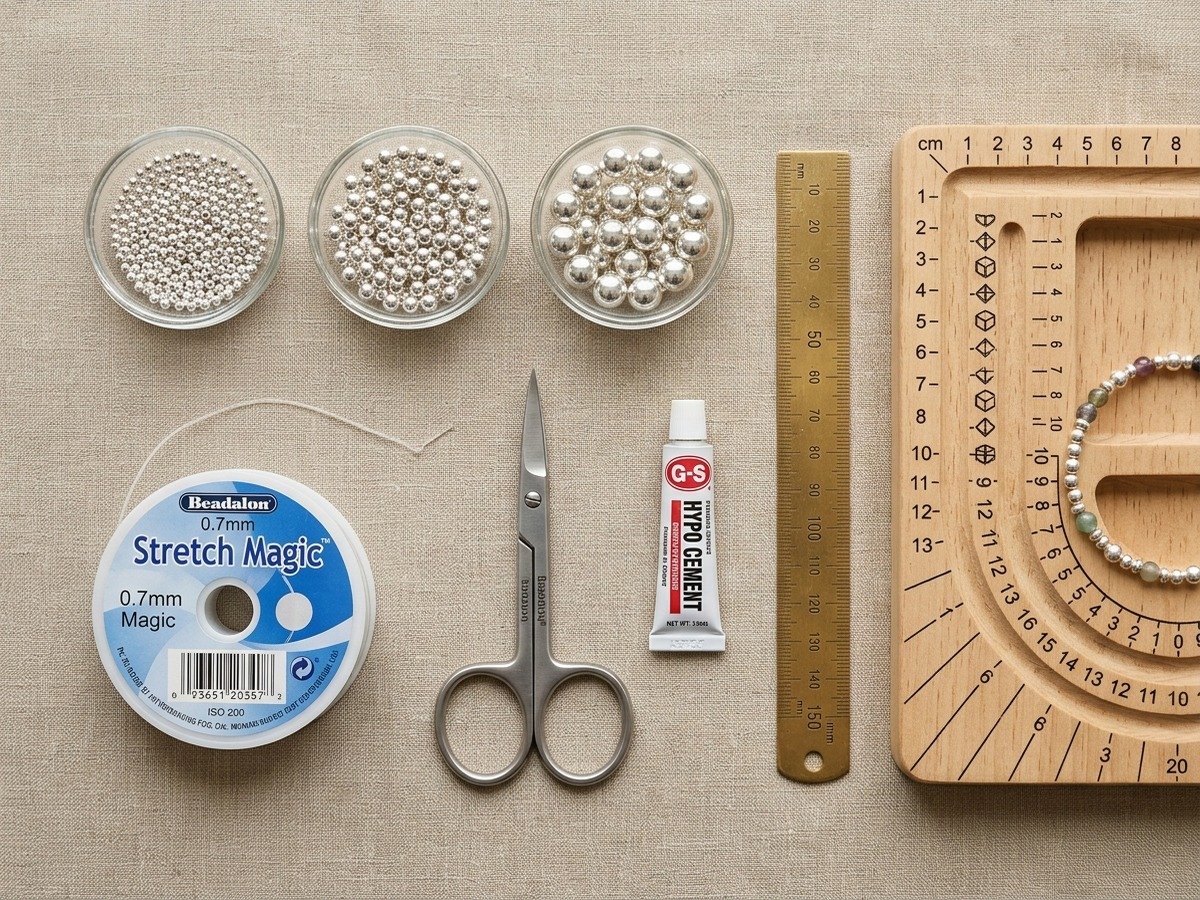
Essential Supplies and Materials for Silver Beaded Bracelets
High-quality jewelry always starts with the right foundation. Choosing the proper metal grade and cord thickness makes the difference between a bracelet that snaps during its first week and one that withstands daily wear.
- 925 Sterling Silver Round Beads: Seamless, hollow or solid round beads in your chosen diameters (3mm, 4mm, 5mm, or 6mm). Ensure at least one bead has an enlarged 1.2mm drill hole to hide your finished knot.
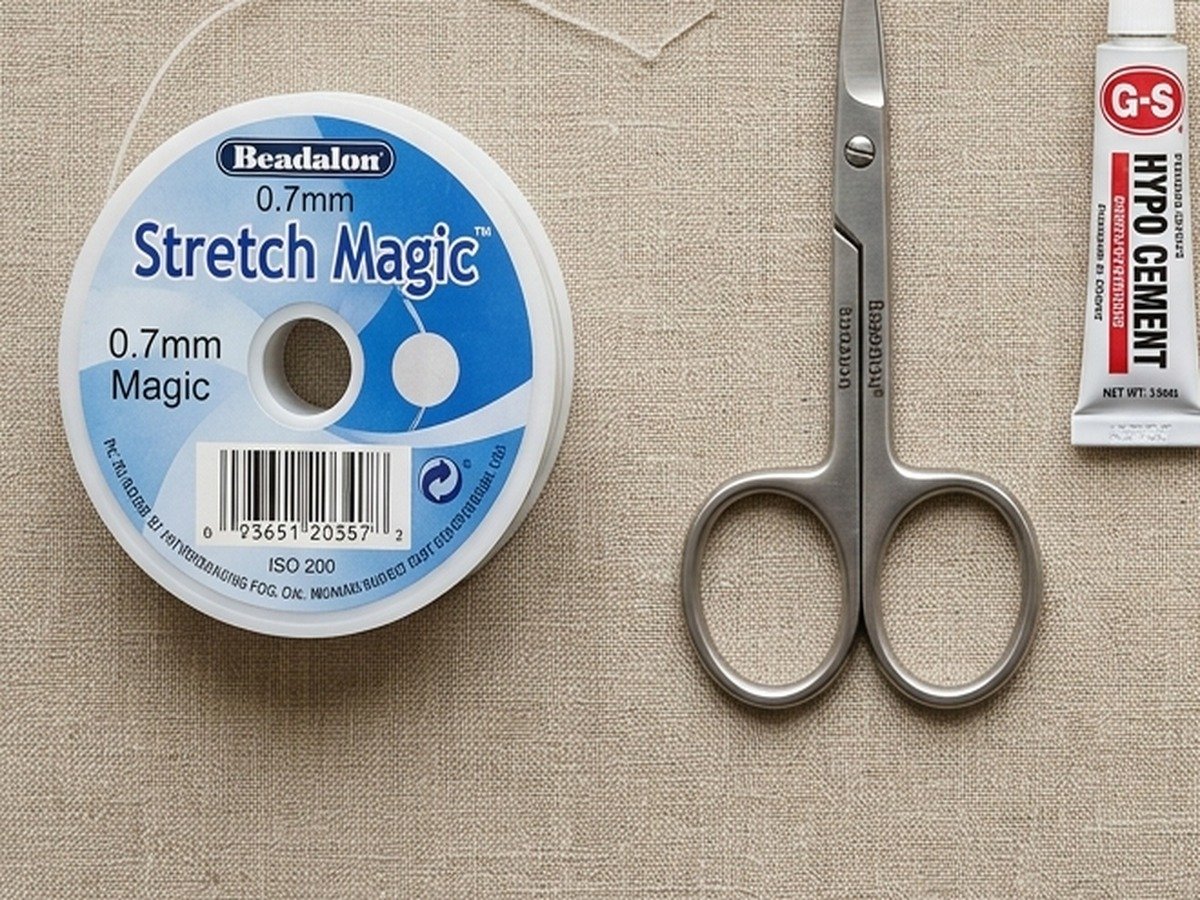
- Beadalon Stretch Magic Elastic Cord (0.7mm): The industry benchmark for beaded stretch jewelry. It offers optimal tensile strength while passing cleanly through standard bead holes.
- G-S Hypo Cement: A specialized watchmaker and jeweler adhesive featuring a pinpoint applicator needle. It dries crystal clear with a flexible rubberized bond that will not turn brittle.
- Beading Design Board or Velvet Bead Mat: Prevents smooth silver beads from rolling across your workspace and allows you to test circumference sizing accurately.
- Bead Stopper Spring or Painter Tape: Clamps onto the tail end of your cord to prevent beads from slipping off as you string.
- Sharp Embroidery Scissors or Flush Cutters: For trimming elastic cord tails flush against the hidden knot.
- Flexible Measuring Tape: Essential for taking a precise baseline measurement of your wrist.
Sterling Silver vs Silver Plated vs Stainless Steel
When shopping for metal beads, you will encounter three common materials: sterling silver, silver-plated brass, and stainless steel. Understanding how these metals perform over time helps you select the right beads for your budget and lifestyle.
Genuine 925 sterling silver consists of 92.5 percent pure silver alloyed with 7.5 percent copper for strength, adhering to standards monitored by the Federal Trade Commission Jewelry Guides. Sterling silver develops natural surface oxidation over time, but it can be restored to full mirror brilliance in seconds. Because the metal is solid throughout, elastic cord friction will never wear away an outer finish.
Silver-plated beads feature a microscopic layer of silver electroplated over a base metal like copper or brass. While very affordable, the friction of beads rubbing against each other along an elastic strand quickly rubs off the thin plating, revealing dull yellow brass underneath within a few weeks of wear.
Stainless steel beads offer impressive resistance to scratches and never tarnish, making them popular for active lifestyles. However, steel carries a darker, industrial gray undertone rather than the warm, bright white reflection characteristic of fine sterling silver.
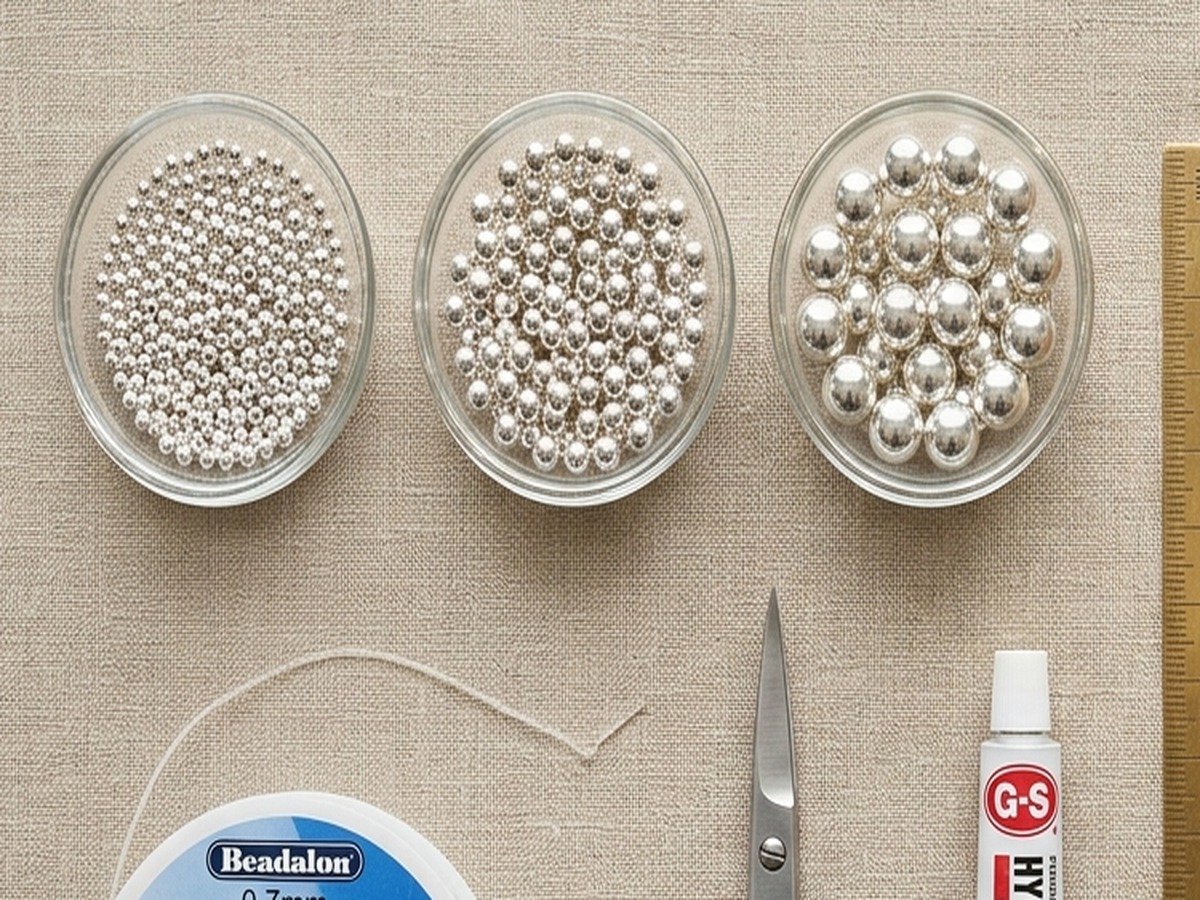
Selecting the Right Silver Bead Size
The millimeter diameter of your beads completely dictates the weight, flexibility, and visual personality of your finished bracelet. Here is how the most popular round bead sizes compare when building individual pieces or coordinated stacks:
3mm Sterling Silver Beads: Dainty and Minimalist
A 3mm silver beaded bracelet creates an exceptionally delicate, whisper-thin shimmer around the wrist. These micro-beads drape softly like fluid silver fabric and work beautifully as spacer accents between larger statement pieces or gemstone strands.
Because 3mm beads have tiny internal drill holes (often around 0.6mm to 0.7mm), you must use 0.5mm Stretch Magic cord or select beads specifically drilled for stretch cords. They require slightly more patience to string, but the refined, understated aesthetic is well worth the effort.
4mm Sterling Silver Beads: The Everyday Universal Standard
If you only craft one bracelet, choose 4mm round beads. This size strikes the sweet spot between structural presence, tactile comfort, and effortless stacking versatility. They accommodate standard 0.7mm elastic cord with ease and feel substantial on the wrist without catching on clothing cuffs.
A 4mm strand serves as the foundational anchor for almost every classic jewelry stack. It looks polished worn alone with a watch, yet pairs gracefully alongside textured cord designs from our how to make beaded bracelets guide.
5mm and 6mm Sterling Silver Beads: Bold Statement Pieces
Beads measuring 5mm or 6mm produce a striking, tactile bracelet with noticeable luxury weight. These larger spherical silhouettes reflect light dramatically and create an immediate focal point in any jewelry arrangement.
Because larger beads have greater interior volume, their inner drill holes are generously sized (often 1.2mm to 1.5mm). This makes knot hiding remarkably easy. A single 6mm bracelet paired with two slimmer 3mm strands creates instant visual hierarchy.
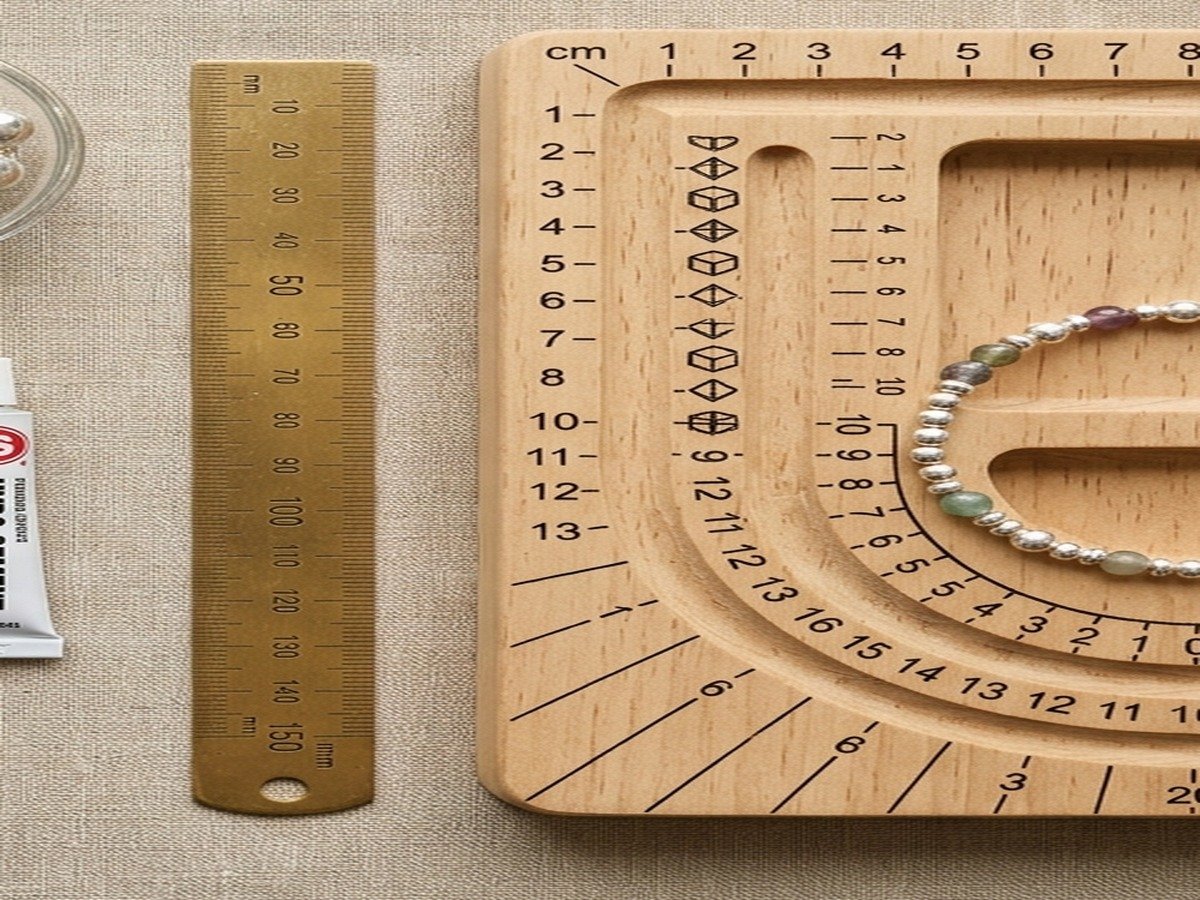
Silver Beaded Bracelet Sizing Chart and Bead Count Guide
Accurate sizing is critical when assembling stretch jewelry. If a bracelet is too small, constant tension weakens the cord and creates unsightly gaps between beads. If it is too loose, the beads slide excessively and risk catching on furniture corners.
To find your size, wrap a flexible measuring tape snugly around your wrist just above the wrist bone. Do not add slack yet. Record your exact wrist circumference, then add 0.5 inches (12.7mm) for a classic comfortable fit, or 0.75 inches (19mm) for a loose, draped fit.
Bead diameter directly impacts the interior circumference of a bracelet. Larger spherical beads push the cord outward, requiring a slightly longer linear strand than small seed beads to achieve the exact same wrist fit.
Step-by-Step Tutorial: How to Make a Silver Beaded Bracelet
Follow this reliable sequence to assemble, knot, and seal your bracelet. Taking care during preparation prevents ninety percent of all common elastic jewelry failures.
Step 1: Cut and Pre-Stretch Your Elastic Cord
Cut a 10 to 12 inch (25 to 30 cm) section of 0.7mm Stretch Magic elastic cord. While your finished bracelet will only measure around seven inches, having generous tails on either side gives your fingers the leverage required to pull an ultra-tight surgeon knot later.
Before stringing a single bead, hold the cord between your thumbs and index fingers and pull firmly along its entire length three to four times. All synthetic polyurethane elastic has inherent elasticity memory. Pre-stretching removes this initial relaxation factor so your bracelet will never loosen after you wear it.
Step 2: Secure Your Tail and String the Beads
Attach a bead stopper spring or fold a small piece of blue painter tape around one end of the cord roughly two inches from the tip. This prevents your beads from sliding off onto the floor as you work.
Begin stringing your sterling silver beads. Always start your strand with your designated anchor bead (the bead with the larger 1.2mm drill hole). By placing the anchor bead at the very start, it will naturally sit right beside your knot when you complete the circle.
Step 3: Verify Wrist Fit and Pattern Balance
Once you reach the target bead count from our chart, gently wrap the unknotted strand around your wrist to verify the drape. Ensure the ends meet cleanly without leaving cord gaps between beads.
If you incorporated any accent charm rings, gemstone spacers, or beads from our preppy clay bead bracelet ideas, check that your symmetry feels balanced on the design board before proceeding to the knotting stage.
Step 4: Tie the Double Surgeon Knot
Remove the bead stopper while holding both cord tails firmly. Bring the two cord ends together and cross them over into a standard first half-knot. Before pulling tight, loop the working end through the center opening a second time. This extra wrap creates a surgeon knot, which grips itself under tension and will not slip loose while you finish the tie.
Pull both tails firmly until the loop closes snugly against the adjacent beads. Next, tie a second standard square knot directly over the surgeon knot. To lock the core, pull all four strands simultaneously: pull the two cut tails outward while gently pulling the two beaded sides away from each other.
Step 5: Apply Jewelry Adhesive and Cure
Pick up your tube of G-S Hypo Cement. Using the ultra-fine needle tip, place a single microscopic droplet of cement directly onto the center of the tied knot. Avoid spreading glue onto the polished silver bead faces.
Allow the adhesive to set undisturbed for twenty minutes. G-S Hypo Cement bonds into a resilient, slightly flexible seal that moves with the elastic rather than snapping like brittle cyanoacrylate super glues.
Step 6: Conceal the Knot Inside Your Anchor Bead
Using sharp embroidery scissors or flush cutters, trim the excess cord tails, leaving approximately 1mm of elastic protruding from the knot. Never trim directly flush against the knot core, as cords naturally seat slightly inward under tension.
Gently grasp the anchor bead and pull it directly over the trimmed knot until the knot slips inside the hollow cavity. Your finished silver beaded bracelet is now completely seamless, with zero exposed cord tails or visible glue marks.
Curating and Stacking Your Silver Beaded Bracelets
The true charm of silver beaded jewelry comes alive when you layer multiple strands together. Stacking creates rich visual dimension, rhythmic movement, and soft acoustic chime on the wrist.
The Rule of Three: Graduated Bead Diameters
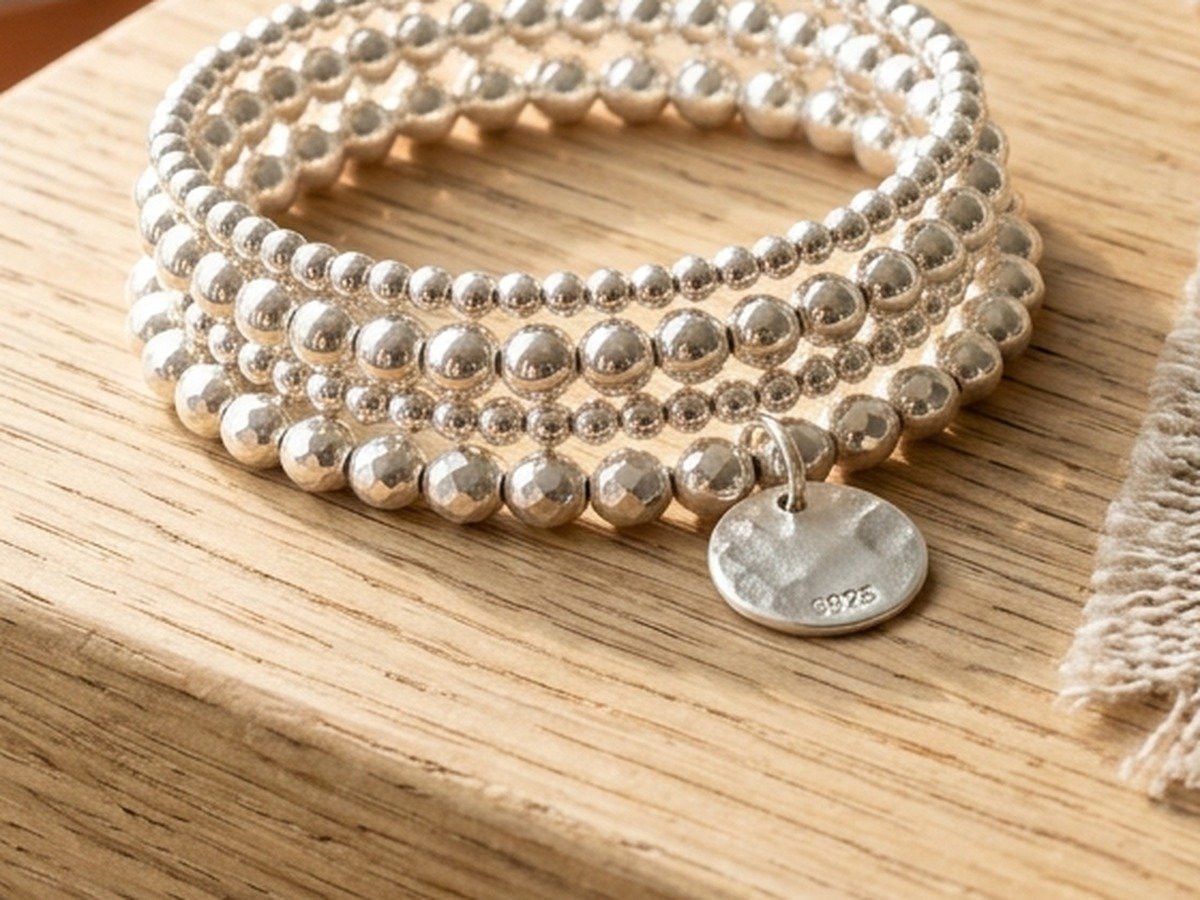
An odd number of bracelets always looks more deliberate and balanced than an even pair. For an effortless everyday trio, assemble one 3mm strand, one 4mm strand, and one 5mm strand. Placing the thinnest 3mm bracelet closest to your hand and graduating toward larger beads as you move up the forearm elongates the wrist gracefully.
Mixing Textures and Finishes
To keep an all-silver stack from appearing flat or overly uniform, introduce varied surface textures. Pair smooth, mirror-polished round beads with corrugated stardust beads, diamond-cut faceted rounds, or a rustic hammered coin charm stamped with your initials.
You can also weave in organic textures by alternating silver spheres with miniature freshwater seed pearls, natural turquoise rondelles, or delicate macramé elements crafted from our cotton rope macrame tutorials.
Two-Tone Stacking: Silver and Gold Harmony
Modern jewelry design has completely retired the outdated rule against mixing metals. Stacking cool 925 sterling silver beads beside warm 14k gold-filled spheres creates a sophisticated, multi-tonal aesthetic. Try sandwiching two sleek 3mm silver strands on either side of a single 4mm gold bracelet to establish cohesive balance.
Care and Cleaning Tips for Long-Lasting Shine
Because genuine sterling silver naturally reacts with airborne sulfur and moisture over time, basic maintenance keeps your bracelets glowing brightly. Follow these simple care guidelines to protect both the metal luster and the internal elastic cord:
- The Roll-On Rule: Never stretch a bracelet wide open to yank it over your hand. Instead, gently roll the beads over your knuckles and onto your wrist. Rolling puts zero sudden stress on the elastic core.
- Chemical Avoidance: Remove your silver bracelets before swimming in chlorinated pools, soaking in hot tubs, or applying perfumes, body lotions, and hand sanitizers. Harsh chemicals rapidly degrade polyurethane elastic and accelerate silver oxidation according to ASTM International Standards for jewelry materials.
- Gentle Microfiber Polishing: Restore surface shine using a dry, treated jewelry polishing cloth. Rub the beads gently in circular motions to lift faint oxidation without scratching the metal.
- Tarnish Removal: If your silver begins to show deeper oxidation after storage, follow our step-by-step tutorial on how to clean silver jewelry at home using gentle, non-abrasive methods that protect delicate elastic strands.
- Airtight Storage: When you are not wearing your bracelets, store them in a small ziplock bag or velvet jewelry pouch along with an anti-tarnish strip to block ambient humidity.
Frequently Asked Questions
What is the best cord thickness for a silver beaded bracelet?
For 4mm, 5mm, and 6mm sterling silver beads, 0.7mm Beadalon Stretch Magic is the gold standard. It provides the ideal balance between high breaking strength and smooth pass-through. If you are stringing delicate 3mm micro-beads with smaller drill holes, switch to 0.5mm elastic cord.
Can I use super glue on elastic bracelet knots?
You should avoid standard super glues. Cyanoacrylate dries into a rigid, brittle glass-like crystal that cuts through synthetic polyurethane elastic when the bracelet stretches over your hand. Always use flexible jewelry adhesives like G-S Hypo Cement or E6000 Plus.
Why did my silver beaded bracelet stretch out and become loose?
Bracelets stretch out when the maker forgets to pre-stretch the elastic before stringing. All stretch cord retains initial factory tension. Pulling the cord firmly several times prior to adding beads relaxes that slack immediately, ensuring the finished piece never sags.
Can you shower or swim with a sterling silver beaded bracelet?
While pure water does not harm solid sterling silver, tap water minerals, body soaps, and swimming pool chlorine weaken elastic cords and speed up surface tarnishing. To maximize bracelet lifespan, remove your stretch jewelry before showering or swimming.
How do I know if my silver beads are real sterling silver?
Genuine sterling silver beads are marked or certified as 925 by reputable jewelry findings suppliers as evaluated by the Gemological Institute of America. Solid sterling silver is non-magnetic, does not chip or peel like plated coatings, and can be verified using the authenticity tips in our guide on how to tell if jewelry is real gold or silver.

