
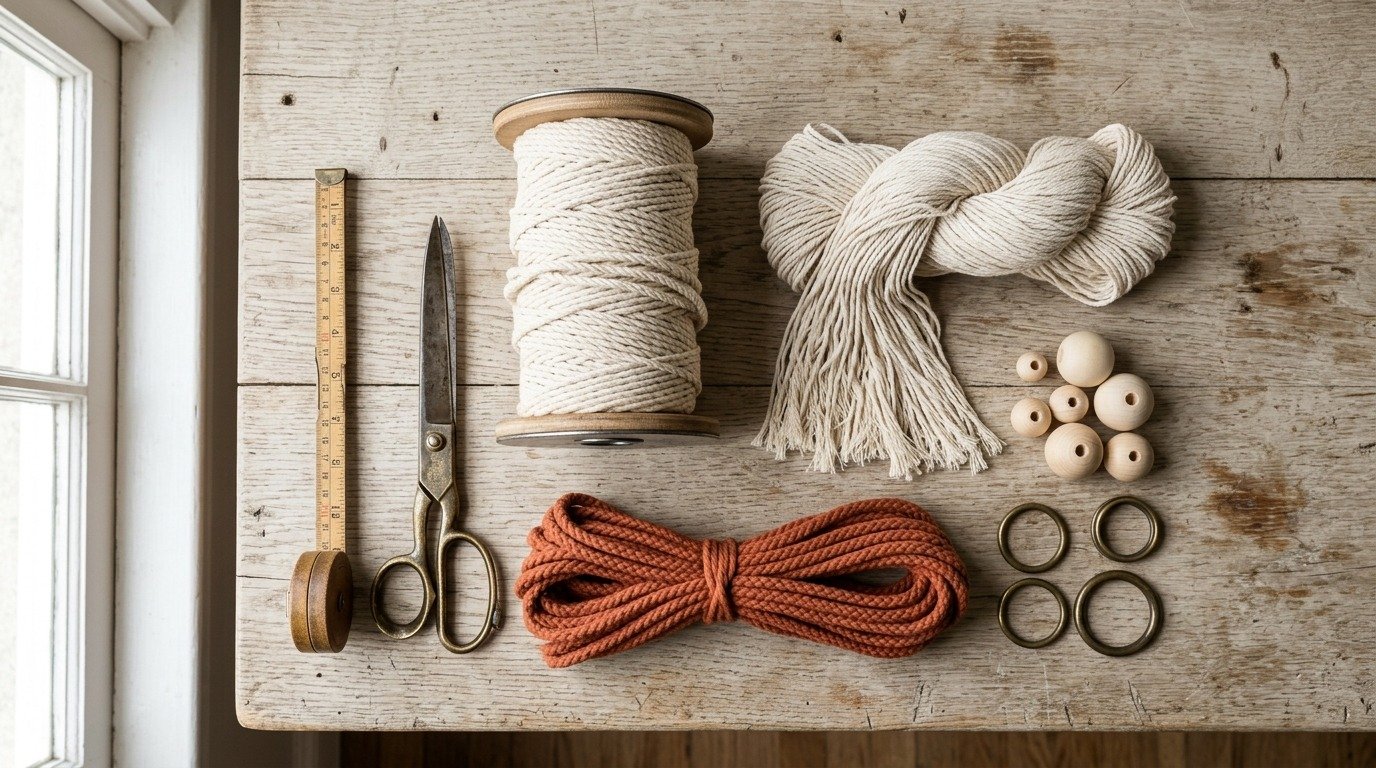
If you have ever started a macrame project with high hopes only to end up with sore fingers, floppy knots, or fringe that refuses to comb out smoothly, the issue was almost always your cord. Choosing the right cotton rope macrame is the single most important decision you make before tying your very first mounting knot.
Walking down the craft aisle or browsing online fiber shops can feel confusing. With labels tossing around terms like three-ply twisted, single-strand string, braided cord, and recycled eco-cotton, it is hard to know which spool actually suits your specific design.
In this maker guide, we will break down everything you need to know about cotton macrame ropes. We will examine structural cord types, decode millimeter thickness charts, explain how to prevent unraveling while knotting, and help you select the exact rope that produces gallery-worthy results.
Quick Answer: Which Cotton Rope Is Best for Macrame?
For general home decor and beginner projects, 3-ply twisted natural cotton rope in 4mm or 5mm diameter is the gold standard. It offers structural rigidity, firm knot definition, and holds heavy weight without stretching, making it ideal for plant hangers and large wall hangings. If your project features lush feathered fringe, fluffy tassels, or bohemian leaves, use 3mm or 4mm single-strand cotton string because it combs out effortlessly. For wearable accessories, market tote bags, or projects that require zero fraying, choose braided cotton cord. Avoid synthetic blends, which slip easily and produce stiff, plastic-like knots.
1. The Three Main Types of Cotton Macrame Cord Explained
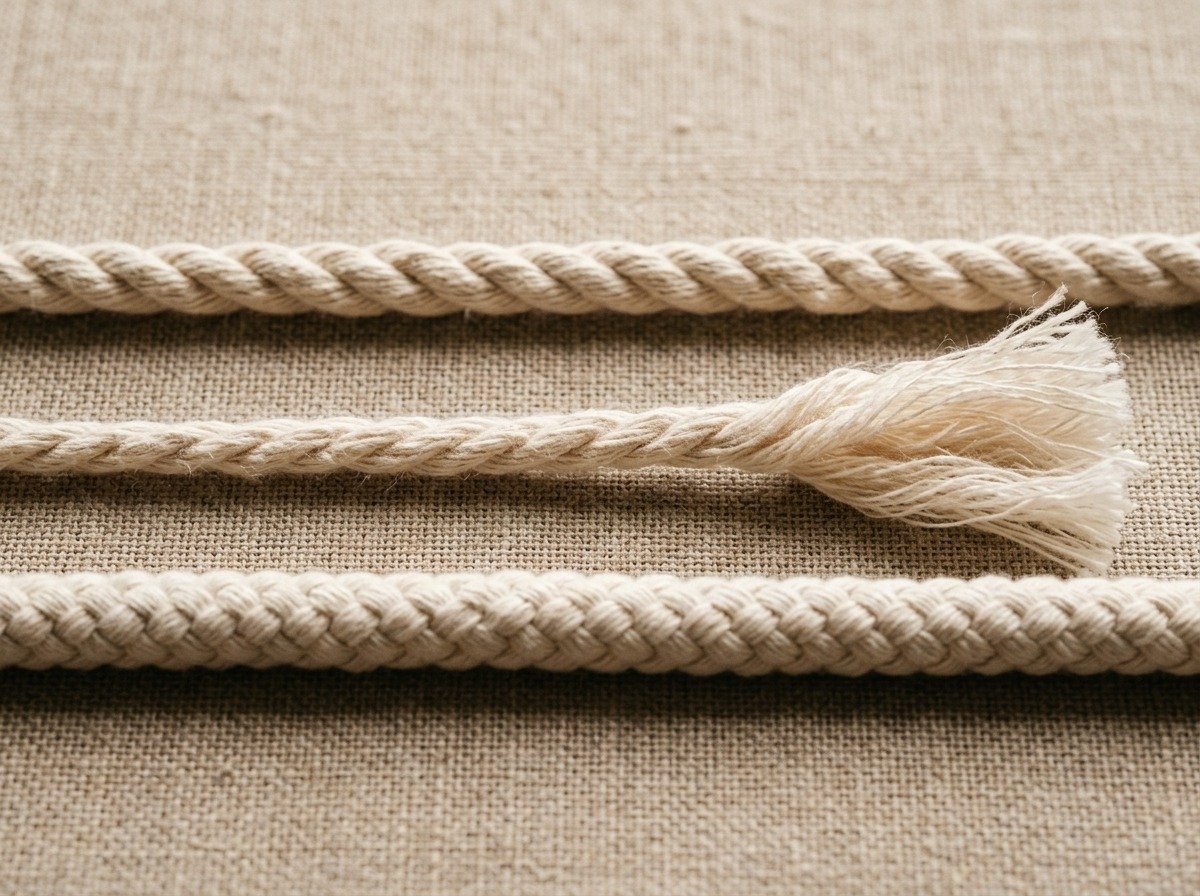
Although all three are often loosely labeled as macrame cord, twisted rope, single string, and braided cord behave completely differently under tension. Understanding their mechanical construction will immediately improve your knotting precision.
A. 3-Ply Twisted Cotton Rope
Three-ply rope consists of three distinct bundles of cotton fibers twisted tightly around each other in a spiral. This is traditional maritime cordage, refined for modern craft rooms. Because of its spiral structure, it is exceptionally durable and forgiving.
Beginners should almost always start with 3-ply rope. If you make a mistake and have to undo five rows of square knots, 3-ply twisted rope can be picked open without losing its shape or turning into a fuzzy bird’s nest.
B. Single-Strand Cotton String
Single-strand cord (frequently called macrame string) is made of hundreds of tiny loose cotton threads gently spun together into a single column. It feels buttery soft in your hands and produces a velvety, luxurious drape.
Single-strand is the undisputed king of fringe. When you brush it out with a wire pet slicker brush, it blooms into cloud-like fluff. However, because it is spun loosely, it untwists quickly during aggressive knotting and has lower tensile capacity than twisted cord.
C. Braided Cotton Cord
Braided cord is woven together like a tubular sleeve, often surrounding a small cotton inner core. It is smooth, round, and slightly springy.
The defining characteristic of braided cord is that it physically cannot unravel. This makes it perfect for functional utilitarian items like tote bags, dog leashes, and clothing cords. The trade-off is that you cannot brush out the ends to create fringe, as cutting it leaves blunt, woven tips.
2. Millimeter Sizing Guide: Matching Cord Diameter to Your Project
Cord thickness is measured in millimeters, ranging from micro 1.5mm jewelry threads to hefty 10mm chunky ropes. Choosing the wrong diameter can throw your pattern scale off dramatically.
Here is how standard cord sizes translate into real-world projects:
- 1.5mm to 2mm (Micro & Delicate): Best for micro-macrame jewelry, delicate earrings, woven bookmarks, and intricate holiday ornaments. Requires patience and sharp fine-motor precision.
- 3mm (Detail & Tabletop): Ideal for drink coasters, delicate plant hangers, table runners, and detailed dreamcatchers. Knots are crisp and clear without adding excessive visual bulk.
- 4mm (The Universal Standard): The sweet spot for 80% of all macrame work. If a tutorial does not specify cord size, use 4mm. It provides great knot visibility, builds speed, and balances structure with flexibility.
- 5mm to 6mm (Heavyweight Decor): Perfect for medium to large wall hangings, wide plant slings, and architectural room dividers. Covers surface area quickly with bold, defined knots.
- 8mm to 10mm (Statement Chunky): Designed for dramatic statement tapestries, hanging hammock chairs, and thick curtain swags. Creates heavy, sculptural lines with minimal knotting time.
If you are planning your first larger home decor piece, explore our detailed walkthrough on How to Make a Large Macrame Wall Hanging to see how 4mm and 5mm ropes combine on a natural wood dowel.
3. Material Quality: 100% Virgin Cotton vs Recycled Cotton
Not all cotton is created equal. Most modern craft spools are labeled either as 100% unbleached virgin cotton or recycled eco-cotton, and each offers distinct tactile benefits.
Natural virgin cotton features long, unblemished staple fibers that have not undergone chemical bleaching. According to fiber performance studies documented by Cotton Incorporated Textile Science Research, natural cotton fibers boast high natural tensile strength, superior moisture absorbency, and a pleasant organic ecru color with subtle natural flecks.
Recycled cotton cords, on the other hand, are spun from reclaimed garment factory scraps. They require no new farming, water, or toxic dyes, making them an environmentally conscious option. Because the fibers are pre-dyed during manufacturing, recycled cords offer hundreds of consistent earthy shades, from dusty sage to muted terracotta.
4. Understanding Cord Twist Dynamics: S-Twist vs. Z-Twist
One subtle detail that separates casual hobbyists from master fiber artists is paying attention to twist direction. When rope is manufactured, the plies are spun together in either a clockwise Z-twist or counter-clockwise S-twist direction.
Most commercial macrame cord in North America uses a right-handed Z-twist. When you tie left-facing half-knot spirals or repetitive square knots, your natural finger motion slightly tightens Z-twisted plies. However, if you work repetitive knots in the opposing direction, the action can slowly unwind the rope strands, causing them to loosen and widen.
If you notice one side of your diamond lattice looking slightly thicker than the other, check your cord rotation. Giving your working cords a gentle quarter-turn between knot clusters restores their natural mechanical spiral.
5. Pro Maker Techniques: Managing Cord Like an Expert
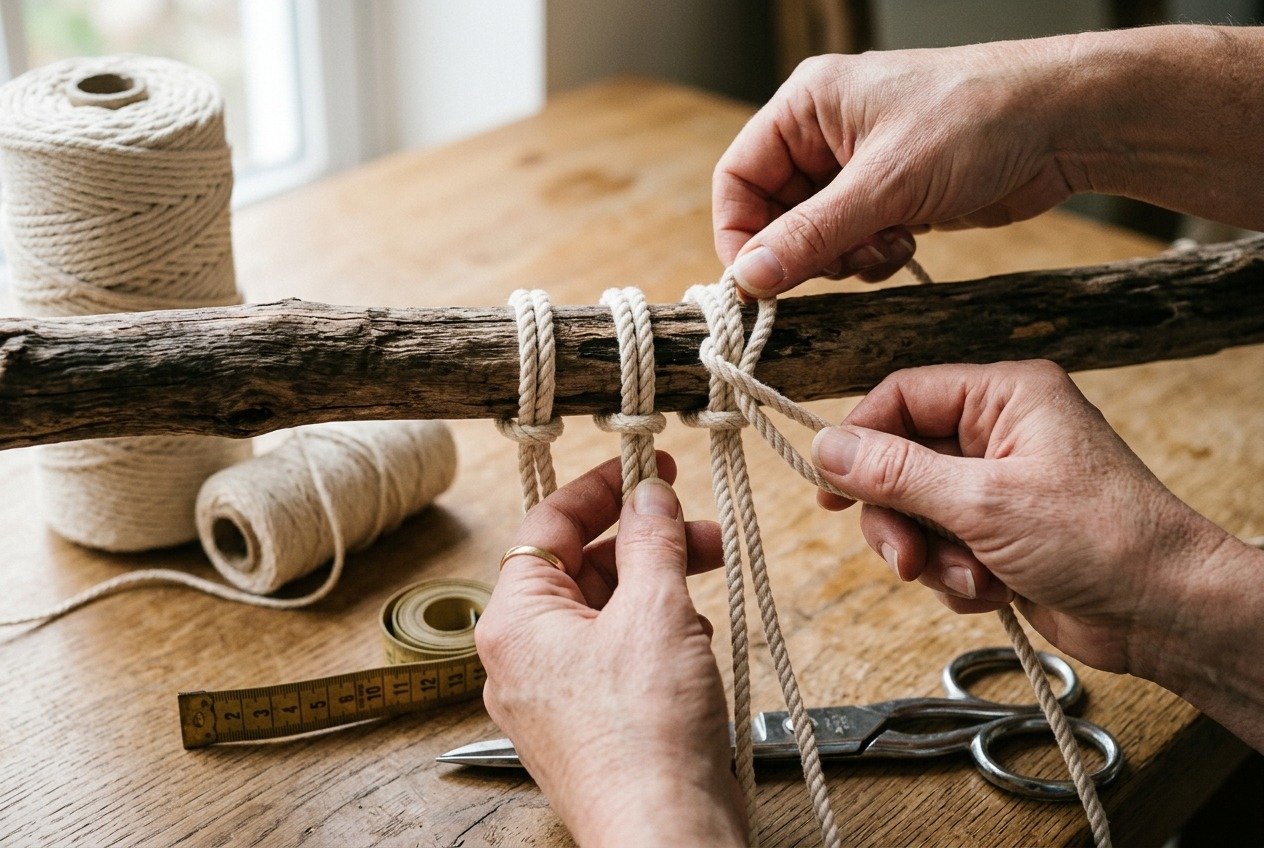
Working with six-foot lengths of thick cotton rope can quickly turn into a frustrating tangle if you do not establish good cord hygiene from the start. Experienced fiber artists rely on three simple workflow habits to keep their workspace organized.
First, always tape your cut rope tips. Wrap a small piece of painter’s masking tape tightly around the end of each cord before you hang it from your dowel. This stops 3-ply strands from untwisting as you drag them through tight knot openings.
Second, wind excessively long working cords into small butterfly bobbins or secure them with elastic hair ties. By reducing a 15-foot cord into a neat palm-sized bundle, you avoid pulling massive lengths across your floor with every pass.
Third, always calculate knot shrinkage before cutting. Square knots consume rope four to six times faster than simple straight hanging cords. Crafters can reference our beginner overview in What Is Macrame Crafting: Knots and Cord to master cord estimation rules.
6. Dip-Dyeing and Color Accents on Natural Cotton Cord
One of the most rewarding aspects of working with raw unbleached cotton is its natural affinity for dye baths. Because cotton is a cellulose fiber, it readily drinks up both modern fiber-reactive dyes and gentle kitchen-based botanical stains.
Agricultural educators at Penn State Extension Sustainable Fiber Arts emphasize that preparing raw vegetable fibers with thorough warm water pre-soaks ensures even capillary dye penetration without splotchy resist spots. You can achieve subtle earthy blush tones using boiled avocado pits, warm golden ochres using yellow onion skins, or deep sepia browns using concentrated black tea.
To create an on-trend ombre dip-dye effect on a finished wall tapestry, submerge the bottom fringe into your dye vat for fifteen minutes. Gradually pull the piece upward by two-inch increments every five minutes to build a smooth gradient transition from deep saturation to pristine raw cotton.
7. Cotton Macrame Rope Sizing and Project Matrix
Use this reference chart to quickly choose the ideal cord diameter, structure, and fringe capabilities for your next craft project:
8. Washing, Care, and Stiffening Your Finished Pieces
Because natural cotton contains raw vegetable fibers without synthetic coatings, regular maintenance preserves its shape and clean color. Over time, hanging wall pieces gather room dust that can dull their ivory warmth.
For routine cleaning, take your hanging outdoors and give it a gentle shake, or use a soft lint roller or hair dryer on a cool setting to lift loose particles. Historical preservation guides curated by the Smithsonian Institution Textile Collections advise against submerging knotted fiber heirlooms in agitated washing machines, as rapid water saturation shrinks raw cotton and distorts tension.
If you are crafting items with brushed-out fringe, such as coasters or decorative feathers, keeping the tassels neat requires proper stabilization. Learn the step-by-step process in our popular tutorial on How to Make Macrame Leaves That Stay Stiff and Flat. For practical dining tabletop accents, you can also explore How to Make Macrame Coasters.
Frequently Asked Questions
What is the difference between macrame cord, rope, and string?
Rope consists of three or more bundles twisted spirally together for structural strength. String is made of loose fibers gently spun into a single soft strand that combs out into fine fringe. Cord is a broad umbrella term that often refers specifically to braided, woven rope that does not untwist.
What size cotton rope is best for macrame plant hangers?
A 4mm or 5mm 3-ply twisted cotton rope is ideal for plant hangers. It easily supports ceramic pots weighing up to 25 pounds without excessive stretching or sagging over time, while keeping your square knots bold and defined.
Can you comb out braided macrame rope for fringe?
No, braided macrame rope cannot be combed into soft fringe. The woven interlocking jacket locks the fibers together permanently. If you attempt to brush braided cord, the ends will fray into uneven, tangled clumps rather than smooth fringe.
How do you prevent cotton rope from unraveling while knotting?
Wrap a small strip of painter’s masking tape tightly around the cut end of each cord before you begin knotting. Alternatively, tie a temporary loose overhand knot at the tail end to prevent twisted strands from separating as you work.
Can you dye natural unbleached cotton macrame rope?
Yes, 100% natural cotton absorbs fiber-reactive dyes, natural plant dyes, and standard all-purpose dyes beautifully. Dip-dyeing the bottom fringe of a finished piece in muted tea, avocado pits, or indigo creates an exquisite ombre gradient.
9. Final Advice for Building Your Fiber Art Stash
Investing in quality materials transforms the entire crafting process from a frustrating chore into a deeply therapeutic, tactile hobby. Whether you are building functional organization pieces like our DIY Macrame Hat Holder Tutorial or creating a grand living room focal point, high-grade cotton cord makes every single knot look crisp, intentional, and polished.
Start by keeping a versatile spool of 4mm 3-ply natural unbleached cotton rope and a spool of 3mm single-strand string in your supply basket. With those two reliable staples within reach, you have the ideal foundation to tackle nearly any bohemian fiber art pattern you discover.
Cut your cords with care, tape your ends, and take your time finding a comfortable knotting cadence. Happy crafting!

