
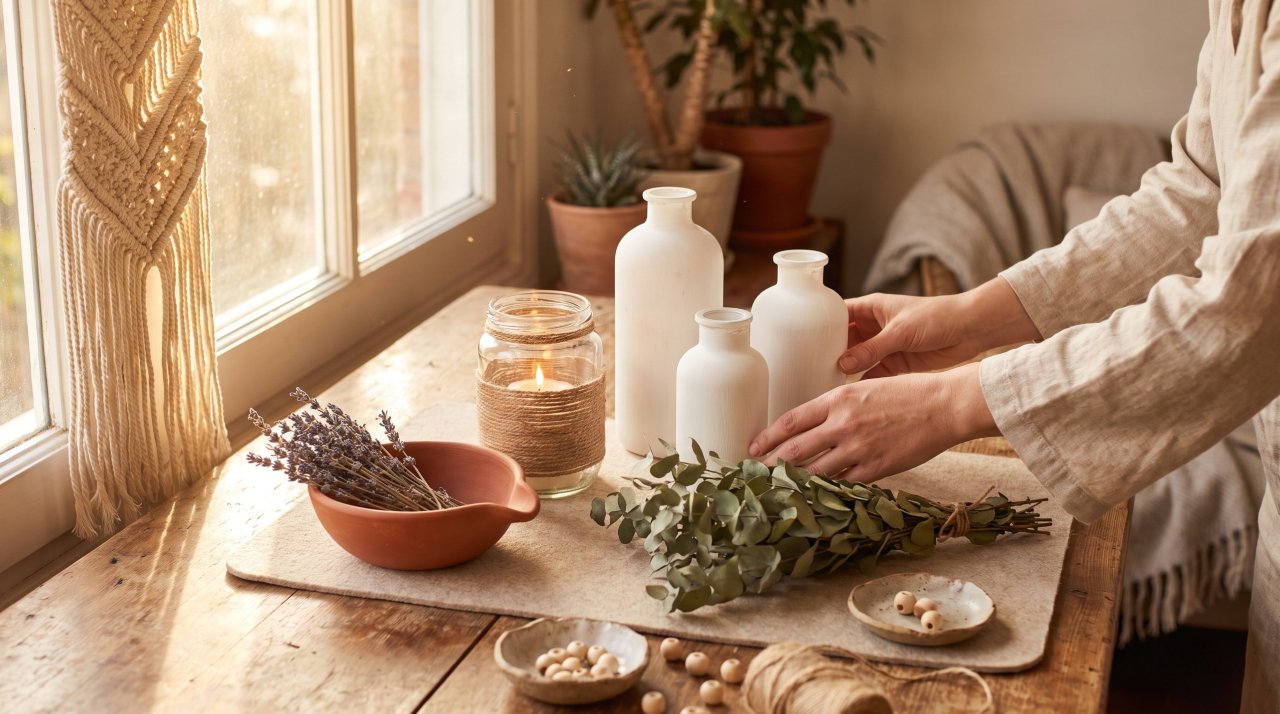
There is a gap between craft tutorials that look beautiful online and what actually comes out on your table at home. That gap is almost never about skill. It’s about three things: material choice, color palette, and how the finished piece is displayed. Most craft roundup lists skip all three entirely.
These 15 aesthetic craft ideas close that gap. Each one uses natural materials in an earthy palette — cotton cord, dried botanicals, terracotta, linen, and raw wood — so the finished result looks cohesive and intentional rather than colorful and chaotic. Interior designers at Apartment Therapy call this “material discipline” — choosing fewer materials in harmonious tones rather than whatever is on sale at the craft store. It’s the single habit that separates crafts that look aesthetic from crafts that just look homemade.
What Makes a Craft “Look Aesthetic”
Before the list, three rules that apply to every project here:
Stick to an earthy palette. Cream, terracotta, sage green, natural beige, and warm brown. If a material comes in twenty colors, choose the one closest to natural. Bright primary colors kill the aesthetic immediately regardless of how well the project is made.
Use natural materials wherever possible. Cotton cord over synthetic rope. Air-dry clay over craft foam. Dried botanicals over plastic flowers. Beeswax candles over paraffin. The texture of natural materials photographs differently — warmer, softer, and more intentional.
Display in odd numbers. One finished piece looks random. Three finished pieces look curated. Five look like a collection. The arrangement is part of the aesthetic.
1. Macramé Wall Hanging
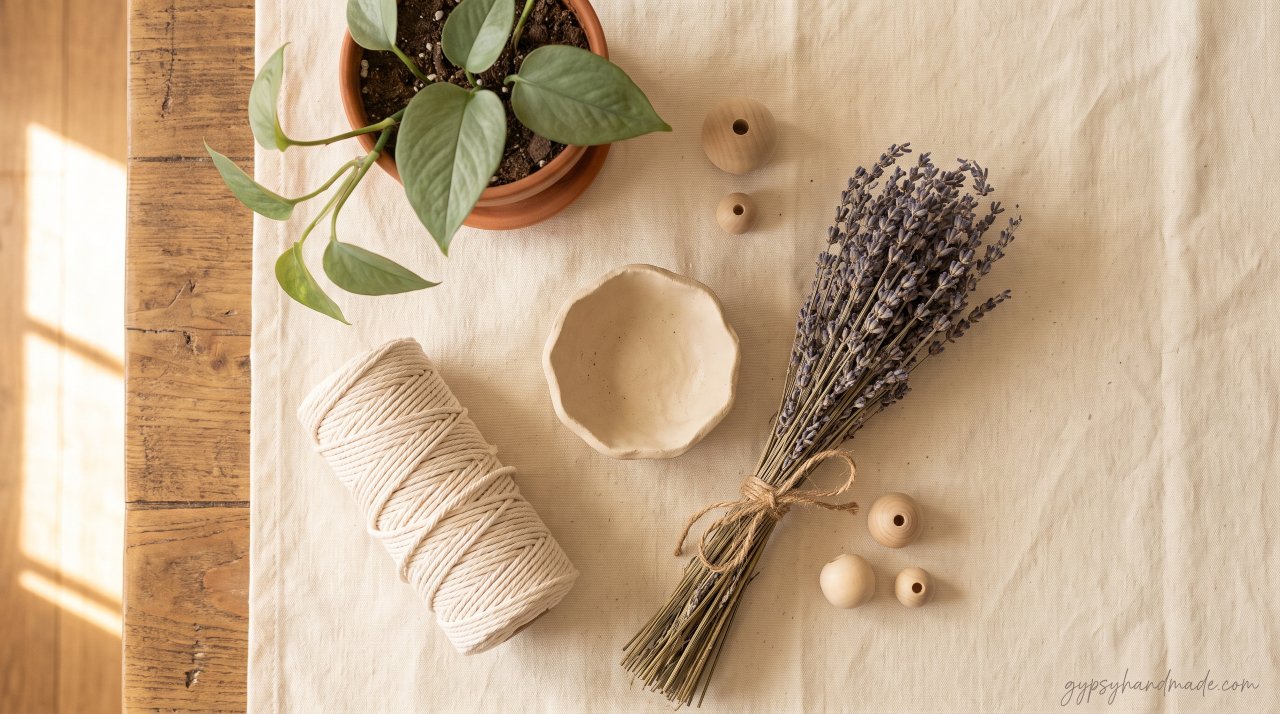
Why it looks aesthetic: The texture of knotted cotton cord is one of the most photographed craft finishes on Pinterest for a reason. The fringe catches light and creates depth that no flat print can replicate.
What makes it succeed: Use 4mm single-strand natural cotton cord, not braided. Single-strand brushes out into a soft, full fringe; braided cord stays stiff and looks cheap when trimmed. Mount on a natural wood dowel or branch rather than a painted one.
Time: 2–3 hours for a first attempt.
The macramé wall hanging beginner guide on this blog walks through the full process with exact cord measurements.
2. Pressed Flower Frames
Why it looks aesthetic: Pressed botanicals in a simple frame are one of the most understated, high-impact craft finishes available. The dried colour — muted pinks, warm yellows, soft greens — sits naturally in the earthy palette without any further styling.
What makes it succeed: Press flowers between the pages of a heavy book for two weeks. Arrange them asymmetrically on cream cardstock rather than centering them. Use a simple black or natural wood frame. The asymmetry is what reads as intentional rather than amateur.
Time: 15 minutes of active work, 2 weeks pressing.
3. Dried Botanical Wreath
Why it looks aesthetic: A wreath made from dried pampas grass, eucalyptus, and lavender stays on the wall for months without maintenance and photographs beautifully in warm light.
What makes it succeed: Use a grapevine or willow ring as the base rather than a foam ring — the natural base material shows through the gaps and adds to the organic look. Attach stems with thin florist wire rather than hot glue visible blobs.
Time: 45 minutes.
4. Macramé Plant Hanger
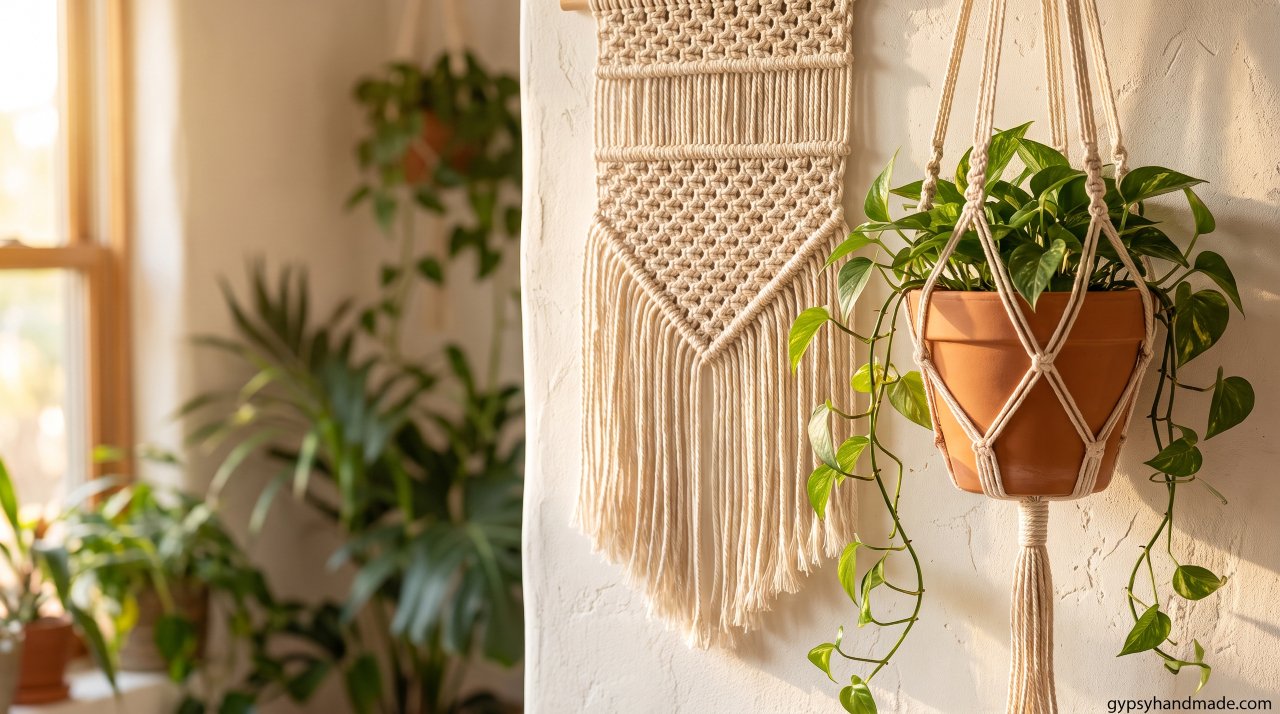
Why it looks aesthetic: A trailing pothos or string of pearls in a macramé hanger is the single most-pinned handmade home decor arrangement on Pinterest. The plant, cord, and terracotta pot work as one cohesive object.
What makes it succeed: Choose a plain terracotta pot, not a painted or patterned one. The natural terracotta color reads as intentional against the cream cord. Use 5mm cord for plant hangers rather than 3mm — the thicker cord holds the pot weight and looks more substantial.
Time: 1–2 hours.
The macramé plant hanger complete guide covers this project in full detail.
5. Air-Dry Clay Pinch Bowls
Why it looks aesthetic: Small handmade clay bowls on a shelf or table surface are one of the most effective low-effort aesthetic additions to any room. They look like expensive artisan ceramics when styled correctly.
What makes it succeed: Don’t try to make them perfectly round or smooth. The slight irregularity of a hand-pinched bowl is what makes it read as artisan rather than mass-produced. Finish with a light coat of matte varnish. Place three in graduating sizes on a tray with a small candle.
Time: 30 minutes active work, 24–48 hours drying.
6. Beeswax Taper Candles
Why it looks aesthetic: Natural beeswax taper candles in cream or honey gold are the easiest aesthetic upgrade for any shelf or table surface. The warm wax color and faint honey scent read as luxurious and handmade.
What makes it succeed: Use 100% pure beeswax sheets rather than paraffin kits. Roll the wax sheet tightly around a cotton wick at room temperature — no melting required. The result is a clean, professional-looking candle in under 10 minutes.
Time: 10 minutes per candle.
7. Beaded Cord Bracelets
Why it looks aesthetic: A stack of natural stone and glass bead bracelets on a wrist is one of the most repinned jewelry aesthetics on Pinterest. The layered, collected look is the entire point.
What makes it succeed: Choose beads in the earthy palette — cream howlite, terracotta ceramic beads, smoky glass, natural wood. Avoid bright or metallic-only combinations. String on stretch cord and tie with a surgeon’s knot for a clean, invisible finish.
Time: 20 minutes per bracelet.
The beginner beaded bracelet guide on this blog covers bead combinations and knotting techniques.
8. Macramé Floating Shelf
Why it looks aesthetic: A macramé shelf combines fiber art with function. A pine board suspended by knotted cotton cord, styled with a small plant, a candle, and a ceramic dish, is a complete aesthetic vignette in one piece of wall decor.
What makes it succeed: The board must be level. A tilted shelf reads as unfinished regardless of how good the knotting looks. Use a spirit level before committing to the wall. The macramé floating shelf tutorial covers the exact cord measurements and locking knot technique.
Time: 2–3 hours.
9. Upcycled Glass Vase Collection
Why it looks aesthetic: Three mismatched glass vases painted in the same matte white or cream become a coordinated collection rather than a random assortment. The repetition of color is what creates the aesthetic cohesion.
What makes it succeed: Use Rust-Oleum matte spray paint in two thin coats from 30cm away. Let each coat dry fully before adding the next. Group three in graduating heights with a single dried pampas stem in the tallest one.
Time: 20 minutes active, 2 hours drying.
10. Twine-Wrapped Candle Holders
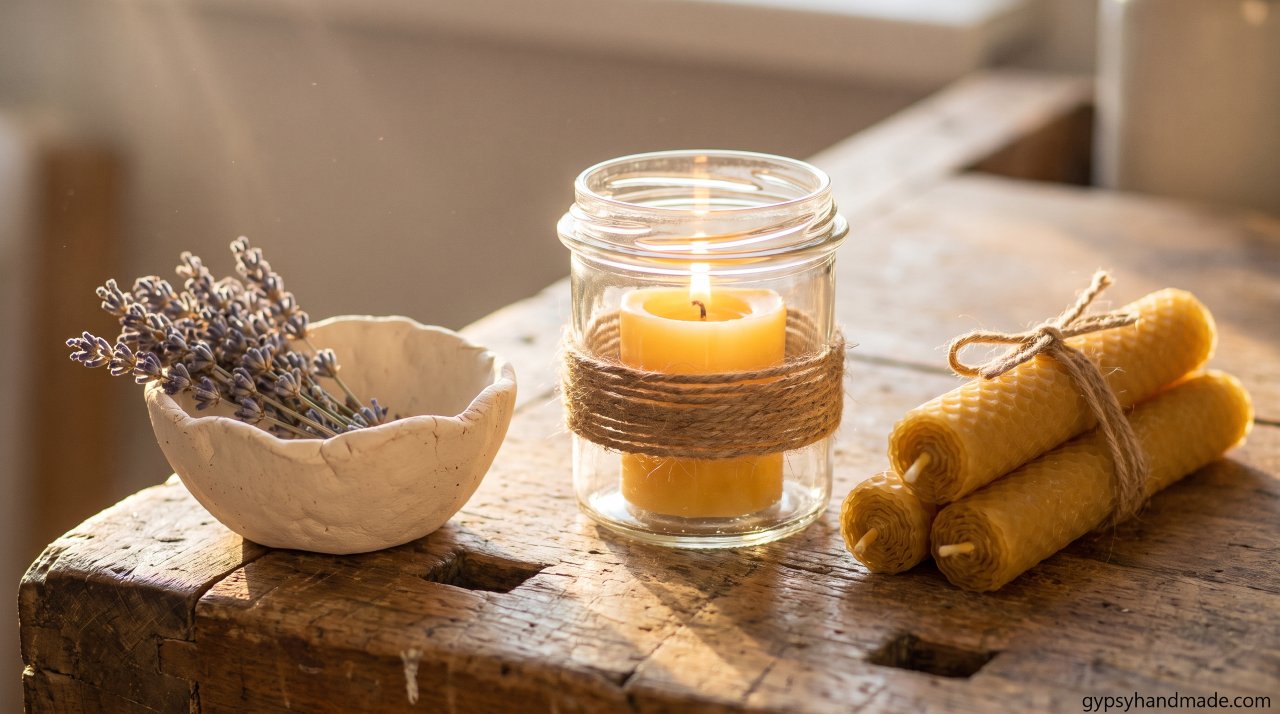
Why it looks aesthetic: A plain glass jar or hurricane lantern wrapped tightly in natural jute twine becomes a textured candle holder that photographs beautifully in candlelight.
What makes it succeed: Use hot glue applied sparingly inside the jar rim rather than across the glass face where it will show. Wrap the twine in tight, even rows with no gaps. Finish with a small dried lavender sprig tucked under the top row.
Time: 20 minutes per jar.
11. Fabric-Wrapped Wire Wreath
Why it looks aesthetic: A wire wreath form wrapped in strips of torn linen or cotton fabric creates a soft, textured wall piece that costs almost nothing and takes under an hour.
What makes it succeed: Tear the fabric into strips rather than cutting — torn edges have a soft, uneven texture that reads as intentional. Use cream, oatmeal, or sage green fabric. Tuck dried botanicals into the wrapped fabric at irregular intervals.
Time: 45 minutes.
12. Macramé Keychain
Why it looks aesthetic: A handmade cotton macramé keychain with a soft brushed tassel is a small, portable piece of the aesthetic that goes everywhere with you.
What makes it succeed: Brush the fringe thoroughly with a pet slicker brush until the cotton fibers fully separate into a soft, full tassel. An unbrushed fringe looks stringy; a properly brushed one looks finished and professional.
Time: 15 minutes.
The complete macramé keychain tutorial covers the exact knot sequence and gathering knot technique.
13. Dried Herb Bundles
Why it looks aesthetic: A bundle of dried rosemary, lavender, or eucalyptus tied with natural twine hanging from a hook in the kitchen or bathroom is one of the most quietly beautiful handmade touches possible.
What makes it succeed: Gather fresh stems, tie tightly at the base with jute twine, and hang upside down in a warm, dry room for two to three weeks. The drying process concentrates both the color and scent. Hang three bundles of different lengths at slightly different heights.
Time: 10 minutes active, 2–3 weeks drying.
14. Linen Tassel Garland
Why it looks aesthetic: A garland of hand-cut linen tassels strung on natural twine along a shelf edge, mantel, or doorframe adds soft texture at eye level — one of the most impactful and least expensive room changes available.
What makes it succeed: Cut linen into consistent strip widths using a rotary cutter and ruler. Fold each strip in half and attach to the twine with a lark’s head knot — the same knot used in macramé. Natural, undyed linen in a warm oatmeal tone works best in the earthy palette.
Time: 1 hour for a 1-meter garland.
15. Chalk-Painted Thrift Store Frames
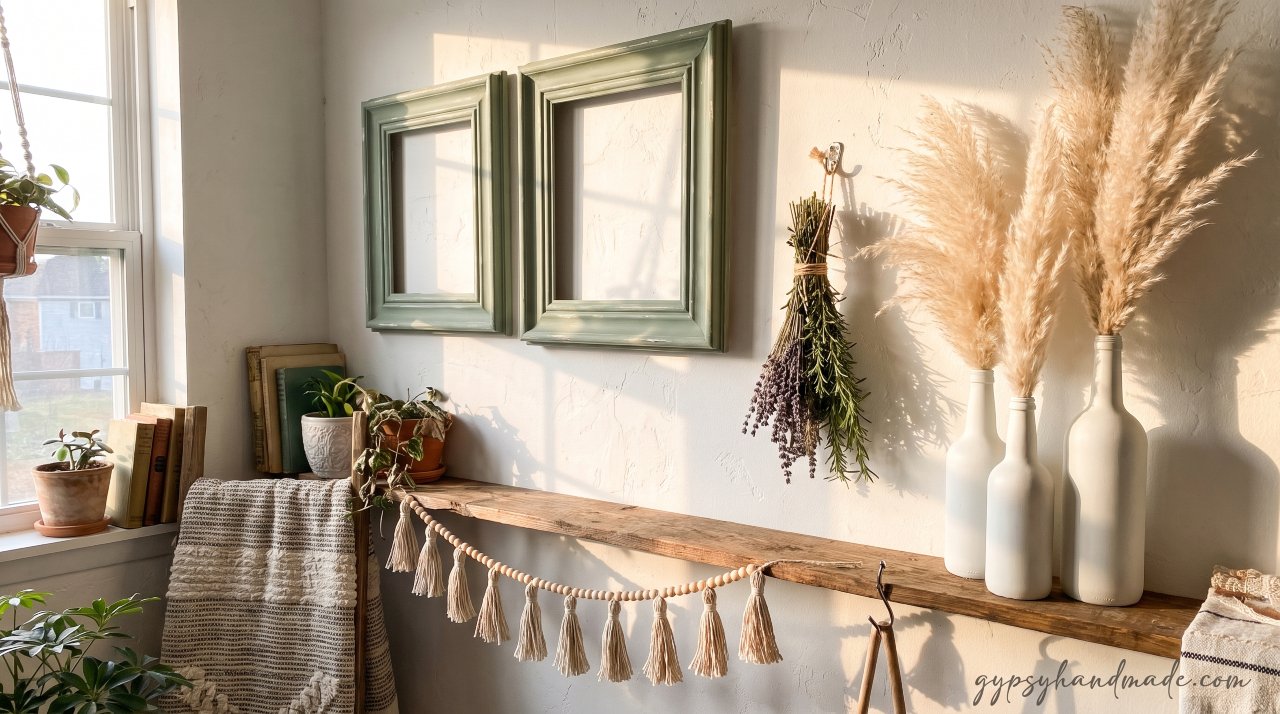
Why it looks aesthetic: A collection of mismatched thrift store frames painted in a single matte color — all sage, all cream, or all terracotta — becomes a cohesive gallery wall rather than a random collection.
What makes it succeed: The paint is almost irrelevant; the decision to use one color across all frames is everything. Use chalk paint because it requires no priming and adheres to any frame material. Arrange the painted frames on the floor first to find the right composition before committing to the wall. More inspiration on thrift store finds that make beautiful home decor.
Time: 30 minutes painting, 2 hours drying.
Frequently Asked Questions
What makes a craft look aesthetic rather than just homemade?
Three things: natural materials in an earthy palette, odd-number groupings when displaying finished pieces, and restraint with color. The most aesthetically consistent crafts use two to three colors maximum, all within the same warm, earthy range — cream, terracotta, sage, and natural wood tones.
What craft materials are most aesthetic?
Natural cotton cord, air-dry clay, jute and linen fabric, dried botanicals, beeswax, raw wood, and plain terracotta are the most consistently aesthetic materials across boho and cottagecore crafting. They all photograph warmly and age gracefully rather than looking dated.
Which aesthetic craft is easiest for a complete beginner?
Pressed flower frames and twine-wrapped candle holders both require zero prior craft experience, cost under $5 in materials, and produce results that look genuinely finished. Beeswax taper candles from wax sheets are also a beginner-friendly project with a high-end result.
How do I make my craft photos look as good as Pinterest?
Photograph near a window with natural light falling from the side rather than from behind or above. Use a plain cream or linen surface as the background. Include one small natural element — a sprig of dried herb, a small ceramic dish, or a piece of cord — to anchor the composition. Avoid shadows from flash and avoid photographing against white walls, which make handmade items look flat.
Are aesthetic crafts expensive to make?
Most of the projects on this list cost under $10 in materials. The cost of aesthetic crafting comes mostly from buying branded supplies (name-brand macramé cord, art store clay) rather than equivalent materials from hardware or bulk craft suppliers. Natural cotton cord from a hardware store is identical to branded macramé cord at a fraction of the price.
Start With One
The aesthetic is built one piece at a time. Pick the project that matches the materials you already have at home — even a single pressed flower frame on a shelf changes what a room communicates. From there, each finished piece gives you a clearer sense of what to make next.
Save this list to your Pinterest craft ideas board so you have all fifteen here when you’re ready for the next one. And if macramé is where you want to start, the beginner macramé wall hanging guide is the most-pinned starting point on this site for a reason.
