
As the golden light of autumn softens and evenings grow pleasantly crisp, the dining table naturally becomes the emotional hearth of the home. Gathering friends and family for comforting harvest meals, hot spiced cider, and holiday celebrations begins with setting an inviting scene. Learning how to create your own diy fall centerpieces allows you to infuse your entertaining space with relaxed bohemian elegance, tactile natural textures, and organic warmth without relying on generic store-bought plastic decor. A thoughtfully styled seasonal centerpiece acts as an expressive visual anchor, welcoming loved ones to linger longer around the table.
Whether your interior decor celebrates modern minimalist calm with creamy ceramic gourds and silver dollar eucalyptus, or embraces rich rustic farmhouse charm with vintage wooden dough bowls, fragrant cinnamon sticks, and glowing amber glassware, handmade styling brings authentic soul to autumn entertaining. In this extensive guide, you will discover 15 elevated DIY fall centerpiece concepts, a comprehensive scale and proportion matrix for every dining table shape, a step-by-step masterclass in styling our signature dough bowl arrangement, and practical guidelines for sightlines and food safety.
Quick Answer: How to Make an Aesthetic DIY Fall Centerpiece
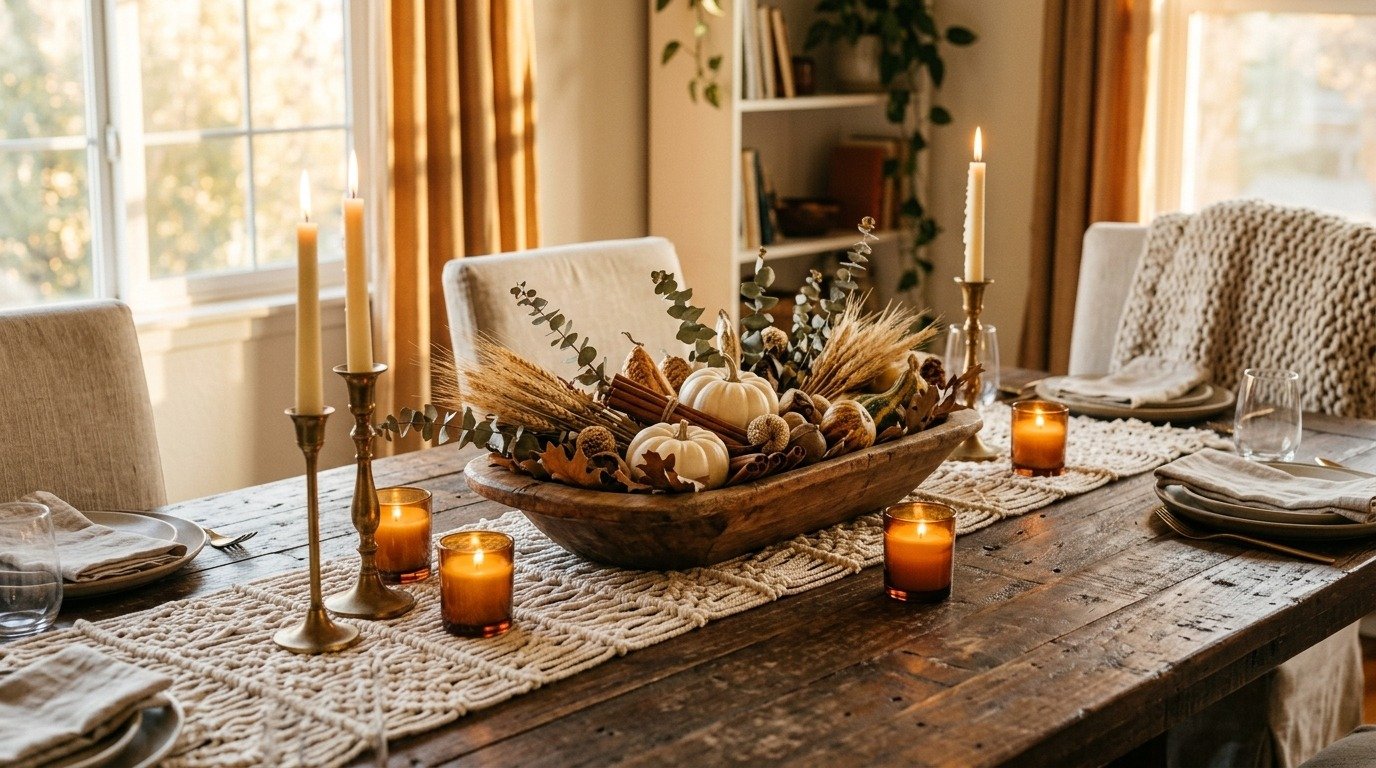
To make an aesthetic modern boho DIY fall centerpiece, anchor your table with a neutral textile foundation such as an unbleached linen or woven macrame runner. Place a 24-inch vintage wooden dough bowl in the center. Fill the vessel with an asymmetrical grouping of 3 to 5 white Baby Boo pumpkins and pale green heirloom gourds. Layer fresh or dried seeded eucalyptus, olive branches, and golden wheat stalks around the pumpkin bases. Intersperse bundled cinnamon quills and small pinecones to hide floral stems. Flank the arrangement with three mismatched brass candlesticks holding dripless ivory taper candles and four amber glass votives for a soft, warm evening glow.
Centerpiece Scale and Table Dimension Reference Guide
A beautifully crafted centerpiece can easily overwhelm a dining table or look lost in excessive empty space if the proportions are miscalculated. Professional interior stylists follow specific mathematical ratios to ensure decorative centerpieces harmonize with tableware, glassware, and serving platters, as outlined in Real Simple seasonal dining tablescape rules. Use this handy dimension reference chart to tailor your centerpiece size to your dining table geometry:
| Table Shape and Size | Ideal Centerpiece Layout | Recommended Dimensions | Maximum Height Limit | Perimeter Clearance |
|---|---|---|---|---|
| Rectangular (6 to 8 seats, 72″-84″) | Linear runner with elongated dough bowl or amber bottle cluster | 24″ to 36″ long x 10″ to 14″ wide | 12″ to 14″ (tapers up to 18″) | 14″ clear for dinner plates |
| Long Banquet (10+ seats, 96″+) | Continuous botanical garland with alternating candle triads | 48″ to 60″ segmented run | 14″ maximum bulk | 15″ clear for platters |
| Round Dining Table (48″ to 60″) | Circular woven tray, ceramic pedestal, or single pumpkin vessel | 14″ to 18″ circular diameter | 12″ maximum height | 16″ radial dining buffer |
| Square Table (48″ to 60″) | Square riser, footed bowl, or tight cluster of 3 varying heights | 12″ to 16″ square footprint | 13″ maximum height | 15″ border clearance |
| Kitchen Island or Breakfast Nook | Compact low tray with 2 mini gourds, bud vase, and votive | 10″ to 12″ compact footprint | 10″ to 12″ height | 18″ food prep clearance |
15 Curated DIY Fall Centerpiece Concepts
Transforming your autumn dining environment does not require formal floristry training or expensive luxury rentals. By combining versatile thrifted containers, foraged botanicals, natural textiles, and handmade accents, you can assemble a distinctive seasonal tablescape tailored to your exact personal taste. Here are 15 inspiring centerpiece concepts that balance warmth, visual balance, and relaxed bohemian sophistication:
1. Hand-Carved Wooden Dough Bowl with White Heirloom Gourds
A vintage or reproduction Paulownia wood dough bowl brings timeless architectural texture to the dining table. Celebrated in American Craft Council hand-carved woodwork traditions, organic wooden vessels introduce authentic historical craftsmanship to modern dining spaces. The shallow depth keeps the visual profile low and accessible, allowing dinner conversations to flow across the table uninterrupted. Fill the base with Spanish moss, dried seeded eucalyptus, and a carefully balanced grouping of miniature white Baby Boo pumpkins and ribbed Casper gourds. Tuck in bundles of real cinnamon sticks tied with jute cord to release a faint spicy aroma whenever warm dishes are served.
2. Vintage Amber Glass Pharmacy Bottle Meadow
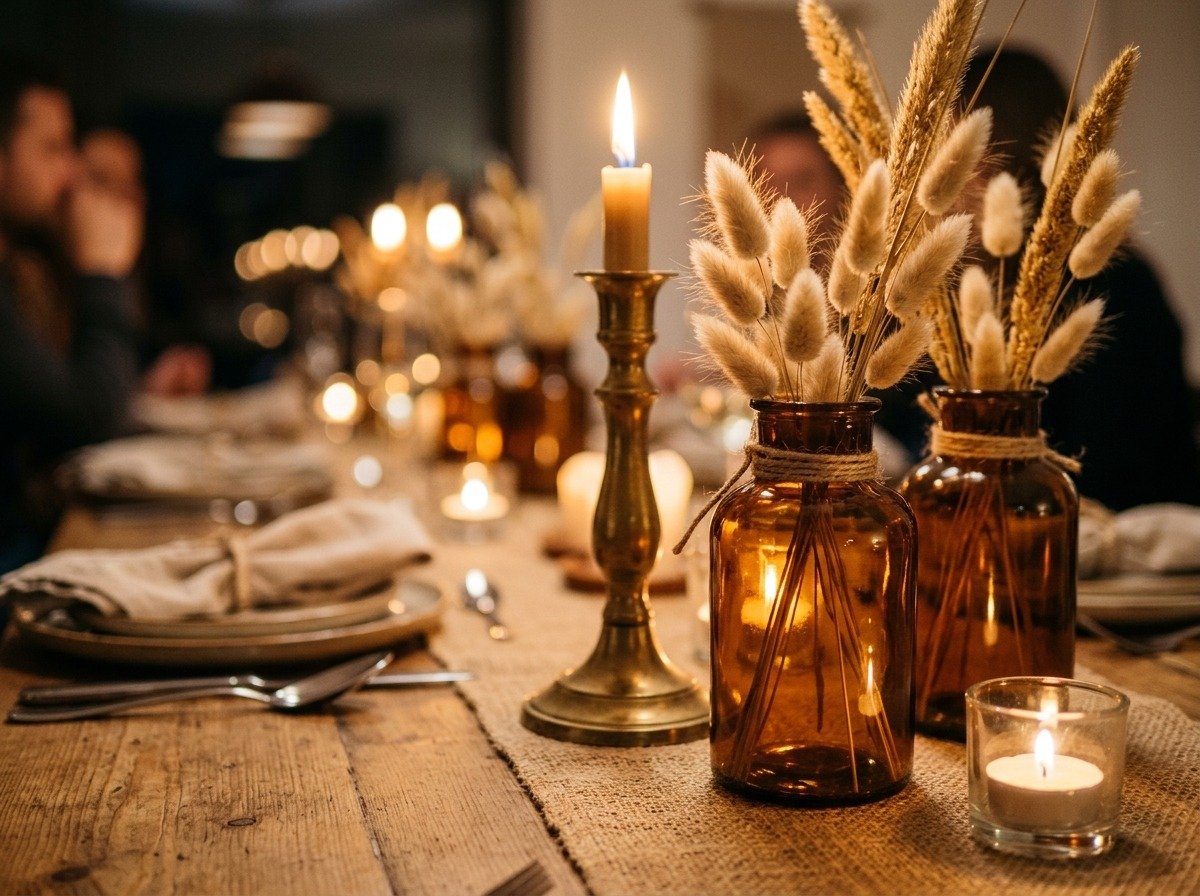
Gather 7 to 11 vintage amber apothecary bottles, medicine vials, and amber wine bottles in varying heights between 4 and 10 inches. Arrange them down the spine of your table in an organic zigzag pattern. Fill each bottle with minimalist botanical stems: fluffy dried bunny tails, delicate bleached stipa grass, single dried terracotta chrysanthemums, or slender sprigs of preserved baby eucalyptus. When evening candle tapers are lit nearby, the amber glass catches the flickering light and casts a honeyed golden radiance across the entire tabletop.
3. Woven Rattan Tray with Pillar Candles and Cinnamon Bundles
If you frequently host family dinners where large serving bowls and hot casserole dishes take center stage, portability is paramount. Arrange a round or rectangular woven rattan tray with three varying heights of unscented ivory beeswax pillar candles (4-inch, 6-inch, and 8-inch). Encircle the candle bases with small pinecones, dried orange wheels, and sweet cinnamon quills. During mealtime, you can lift the entire centerpiece effortlessly and move it to a nearby sideboard to make room for family-style food platters.
4. Cascading Macrame Table Runner with Velvet and Yarn Pumpkins
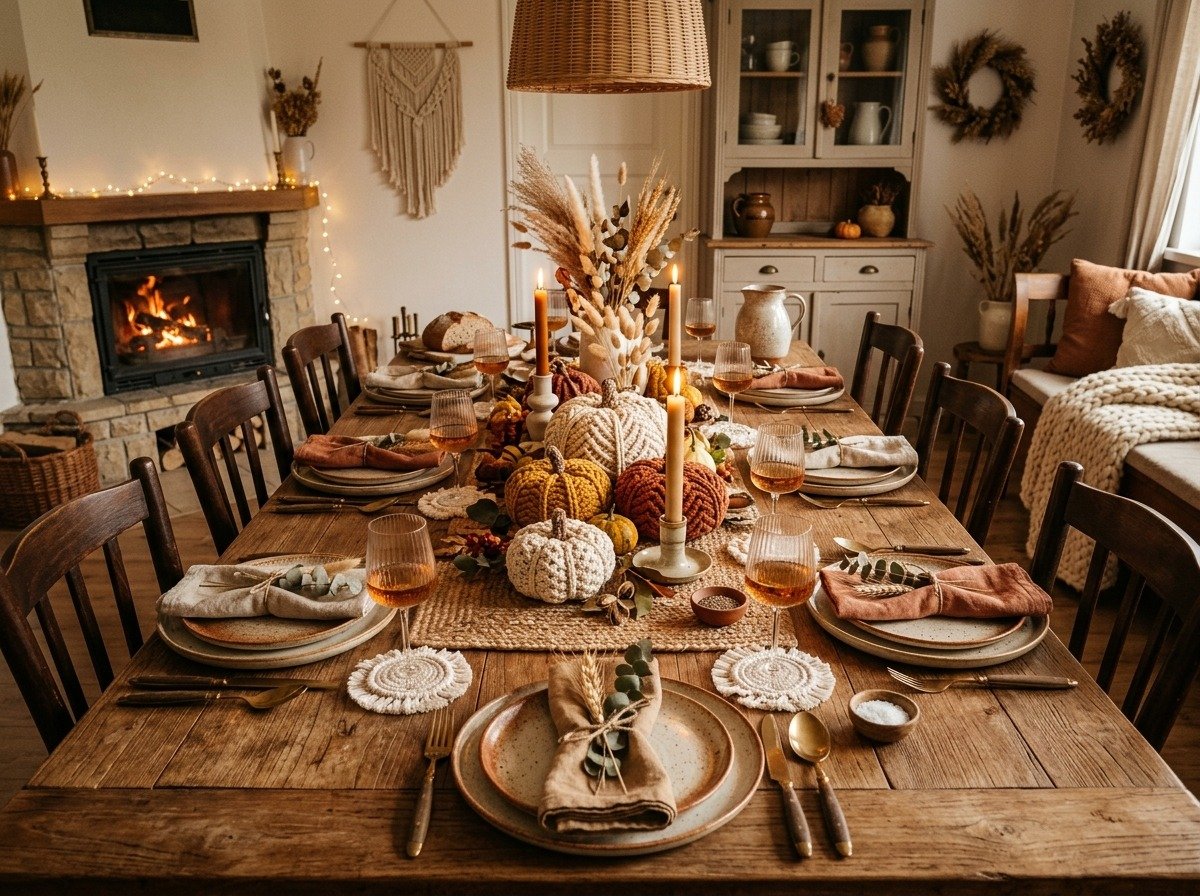
Combine rich fiber arts with seasonal charm by laying down a handmade textile foundation. A custom diy macrame table runner woven from unbleached natural cotton cord provides tactile geometric symmetry. Scatter an eclectic mix of plush velvet pumpkins, knitted boucle gourds, and ribbed macrame pumpkins along the knotted diamonds. Pair the arrangement with handmade coasters crafted from our guide on how to make macrame coasters to protect your wood tabletop from cocktail condensation.
5. Repurposed Brass Candlestick Cluster with Dripless Beeswax Tapers
Scouring thrift shops and flea markets for vintage brass candle holders yields an extraordinary collection of mixed shapes, patinas, and heights. Group 9 to 13 brass candlesticks tightly along the center of the table. Fit them with slender, dripless pure beeswax tapers in earthy tones such as oat, moss green, and terracotta. Weave a loose, airy garland of preserved bay leaves and russet beech branches around the brass bases to soften the metallic gleam with wild woodland texture.
6. Terracotta Painted Clay Pots with Dried Wheat Stems and Craspedia
Transform ordinary miniature clay terracotta pots into rustic artisanal vessels using chalk paint mixed with baking soda to create an authentic weathered stoneware patina. Plant the pots with tight bundles of natural golden wheat stalks, dried yellow craspedia billy balls, and textured broom corn. Line five painted pots down the center runner for a structured, architectural display that celebrates the abundance of the autumn grain harvest.
7. Rustic Wooden Tool Caddy Filled with Neutral Gourd Harvest
An antique or distressed wooden carpentry tool caddy featuring a central round dowel handle offers rustic charm and practical utility. Fill the divided compartments with crinkled unbleached kraft paper, then nestle an assortment of miniature green striped gourds, cream pumpkins, and dried artichoke heads inside. The central wooden handle makes it simple to move the entire display when cleaning or reconfiguring the dining space.
8. Glass Cloche Terrariums with Micro Fairy Lights and Foraged Acorns
Add a touch of whimsical woodland wonder to your harvest table with trio of clear glass cloches set on dark walnut bases. Inside each dome, arrange a petite dried botanic vignette: a miniature white pumpkin resting on a bed of preserved sheet moss, clean foraged acorns with their textured caps, and a delicate coil of battery-operated micro copper fairy lights. The glass reflects the glowing lights, creating an ethereal tabletop atmosphere after sunset.
9. Hollowed White Heirloom Pumpkin Floral Vessel
Use nature itself as your floral container. Take a medium-sized, flat-bottomed white Lumina or Fairytale pumpkin, slice off the top crown, and scoop out the pulp and seeds. Insert a clean glass jar or water-soaked floral foam brick inside. Arrange seasonal blooms in deep jewel tones, including burgundy dahlias, rust-colored garden roses, chocolate cosmos, and trailing seeded eucalyptus. The natural pumpkin vessel feels opulent, organic, and celebratory for Thanksgiving dinners.
10. Floating Fall Botanical Bowl with Sliced Apples and Votives
Water features introduce reflective movement to an autumn table. Fill a wide, shallow ceramic or glass bowl with room-temperature water. Float horizontal slices of red and green honeycrisp apples, fresh cranberries, whole star anise pods, and miniature unscented floating disc candles on the surface. When lit, the candlelight dances on the water, illuminating the crimson fruit and releasing a crisp orchard aroma that delights dinner guests.
11. Minimalist Birch Log Pedestal with Pillar Candles and Jute Twine
If you admire Scandinavian interior design, a natural white birch log centerpiece offers clean lines and earthy texture. Drill 1.5-inch circular recessed holes into the top surface of a smoothed birch branch segment to hold glass tealight cups safely. Wrap both ends of the log with multiple turns of natural jute twine, and flank the wood with sprigs of dried rosemary and small pinecones. The chalky white bark contrasts beautifully against warm wooden dining tables.
12. Galvanized Olive Bucket with Dried Hydrangeas and Pampas Grass
For round tables that benefit from a single dramatic central display, an aged metal olive bucket provides rich texture and subtle farmhouse appeal. Fill the bucket with voluminous dried mophead hydrangea blooms that have cured to antique blush and sage tones. Intersperse plumes of mini dried pampas grass, rabbit foot fern, and curly willow branches to create an airy, architectural arrangement with graceful natural movement.
13. Layered Woven Trivet Tower with Ceramic Gourds and Wood Beads
Create subtle elevation by stacking three round braided jute or seagrass trivets in graduated diameters. Top the woven platform with matte ceramic gourds in neutral shades of bone, sand, and taupe. Drape a strand of unfinished 20mm beechwood beads across the trivet edges, mirroring the handcrafted beauty of our matching mantle guide for a diy fall garland to tie your room together.
14. Antique Book Stack Pedestal with Amber Glass Bud Vases
Introduce vintage literary romance to your table by stacking three or four antique hardcover books in muted cloth bindings of sage green, burnt orange, and gold. Tie the bundle securely with cotton twill tape or frayed linen ribbon. Place a single amber bud vase holding dried bleached thistle and a beeswax tea candle atop the book pedestal for an intellectual, cozy autumn aesthetic.
15. Foraged Branch Chandelier Suspension with Hanging Votives
If you have limited surface space on your dining table, think vertically. Suspend a sturdy, artistically branched fallen branch horizontally above the table using heavy-gauge jute cord or brass chain anchored safely to ceiling joists. Adorn the suspended branch with hanging glass tea light globes, woven macrame leaves, and dried orange garlands. Your dining surface remains completely free for platters while the warm glow radiates from overhead.
Step-by-Step Styling Tutorial: The Modern Boho Dough Bowl Centerpiece
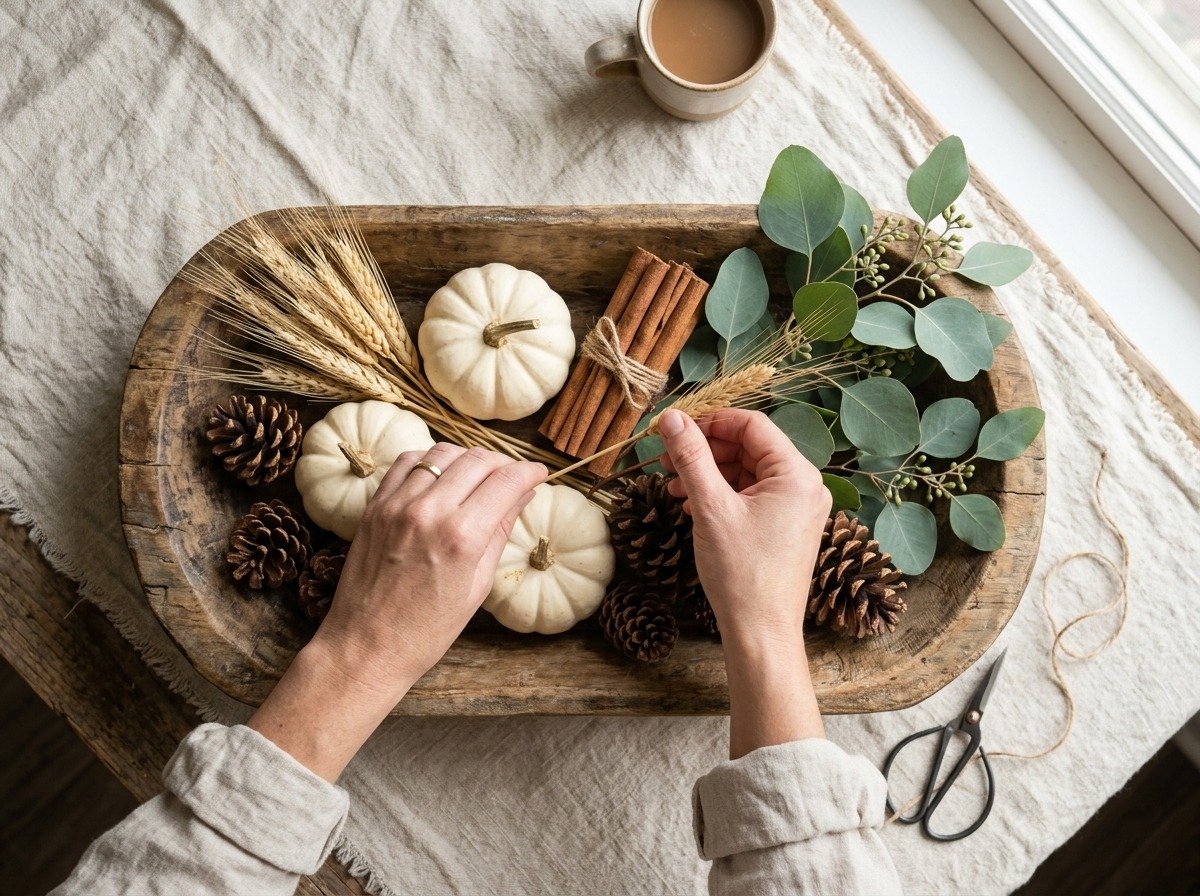
Our signature centerpiece design balances the grounded organic richness of carved wood with the delicate grace of eucalyptus and the clean sculptural form of white heirloom pumpkins. Follow this detailed step-by-step masterclass to assemble this showstopping arrangement in under thirty minutes.
Materials and Supplies Required
- Carved Wooden Dough Bowl: A 20 to 26-inch elongated Paulownia or reclaimed pine dough bowl with a natural, untreated wax or light walnut finish.
- Textile Runner: An unbleached natural linen or hand-knotted cotton macrame table runner measuring 72 to 84 inches long.
- Miniature Heirloom Pumpkins: 5 to 7 assorted mini gourds (White Baby Boo, Casper, striped Sweet Dumpling, and miniature ribbed turban gourds).
- Preserved Seeded Eucalyptus: 3 to 4 substantial stems of preserved or fresh silver dollar and seeded eucalyptus.
- Dried Accent Botanicals: Bundles of dried golden wheat stalks, bunny tail grass, and natural dried lagurus.
- Aromatic Spices: 6 to 8 whole 3-inch cinnamon bark quills and 4 whole star anise pods.
- Natural Jute Cord: 2-ply natural jute twine for bundling cinnamon sticks.
- Brass Candlesticks and Tapers: 3 vintage brass candlestick holders in tiered heights (4″, 6″, and 8″) fitted with dripless ivory beeswax tapers.
- Amber Glass Votives: 4 heavy amber glass votive holders with unscented soy tea lights.
Step 1: Lay the Textile Foundation
Begin by smoothing your table runner along the center longitudinal axis of the dining table. Allow the runner ends to drape over each table edge by at least 6 to 8 inches. If using an unbleached linen runner, gently scrunch the fabric along its length to create soft, organic ripples rather than leaving it stiff and perfectly ironed. Place your wooden dough bowl directly on the center of the runner, ensuring it sits parallel to the table edges.
Step 2: Build the Greenery Base Layer
Take two sturdy stems of seeded eucalyptus and lay them flat inside the bottom of the dough bowl, pointing their leafy tips outward toward opposite ends of the bowl. Allow several branch tips and seed clusters to spill gracefully over the wooden rims onto the linen runner below. This creates visual movement, breaking the rigid geometric boundary of the bowl and softening the transition between container and table.
Step 3: Position the Statement Pumpkins
Select your largest white Casper pumpkin and place it slightly off-center inside the bowl. Avoid placing the largest element dead center, as asymmetry creates dynamic tension and visual interest. Tilt the pumpkin slightly so its curly stem catches the light. Next, arrange two slightly smaller Baby Boo pumpkins beside it, nestling them firmly into the eucalyptus branches. Add two small sage green or striped gourds near the opposite end, maintaining balanced visual weight across the vessel without creating strict mirror symmetry.
Step 4: Weave Aromatic and Textural Accents
Tie pairs of 3-inch cinnamon bark quills together with natural jute twine, finishing each bundle with a tidy bow. Tuck these cinnamon bundles into the small gaps between the pumpkin bases. Intersperse small clusters of dried golden wheat stalks and fluffy bunny tails, tucking their cut stems securely under the pumpkins so they remain anchored. The feathery texture of the dried grasses contrasts elegantly against the smooth, firm skin of the pumpkins.
Step 5: Integrate Ambient Evening Candlelight
Position your three brass candlesticks outside the dough bowl along one flank of the table in a gentle staggered triad (tall candle in the center, flanked by medium and short holders). On the opposite flank, disperse your four amber glass votives at irregular intervals. This asymmetrical lighting layout provides warm, dimensional illumination across the table without blocking views between seated guests. Light the tapers just as guests arrive to create an instantly welcoming atmosphere.
The Golden Rules of Centerpiece Proportion and Sightlines
There is nothing more frustrating at a festive dinner party than having to crane your neck or lean awkwardly across a giant floral arrangement just to make eye contact with the person seated across from you. To keep your table functional as well as beautiful, master these fundamental interior decorating rules:
The 14-Inch Eye Level Rule
When guests sit in standard dining chairs (seat height approximately 18 inches above the floor), their natural seated eye line hovers between 14 and 16 inches above the table surface. Adhering to Martha Stewart Living floral centerpiece guidelines, keeping the visual core below 14 inches preserves seamless conversation across the table. As a strict rule, the dense bulk of your centerpiece (containers, pumpkins, large blooms, and heavy foliage) should never exceed 12 to 14 inches in height. Slender elements such as delicate candle tapers or wispy single stems of dried grass are acceptable above this threshold because they do not obstruct sightlines or conversational connection.
The Elbow Room and Place Setting Buffer
Before finalizing your centerpiece styling, set down two full dinner place settings directly opposite each other, complete with chargers, dinner plates, wine glasses, and water tumblers. Measure the remaining empty width down the center of the table. You must maintain at least 12 to 14 inches of total clearance down the center spine for centerpiece elements. If your table is narrower than 36 inches wide, skip wide bowls and opt instead for an ultra-slender linear runner of trailing eucalyptus and petite bud vases.
Scent Etiquette for Food-Safe Entertaining
While heavily perfumed synthetic candles smelling of pumpkin spice or vanilla frosting are popular in retail stores, they should never be burned on a dining table where food is served. Powerful synthetic fragrances interfere with the delicate olfactory experience of wine and food, competing with culinary aromas and occasionally causing headaches. Stick strictly to 100 percent pure unscented beeswax tapers, clean burning soy candles, or natural botanicals like cinnamon quills and fresh rosemary that provide subtle, appetizing background aroma.
Foraging Guide: Autumn Botanical Treasures from Your Backyard
One of the greatest joys of crafting autumn centerpieces is gathering natural decor directly from your local landscape. Autumn fields, suburban parks, and wooded walking trails offer an abundance of organic textures that rival expensive florist inventory. When foraging, always follow ethical guidelines: never trespass on private property, avoid taking more than one-third of any wild plant stand, and leave plenty of seeds for wildlife.
| Botanical Element | Where to Find | Preparation Technique | Visual Role in Centerpiece |
|---|---|---|---|
| Oak Acorns and Hickory Nuts | Forest edges and neighborhood lawns | Bake at 200°F (95°C) for 2 hours to sanitize | Base filler for glass cloches and wooden bowls |
| Wild Pinecones and Fir Cones | Evergreen forests and park trails | Soak in vinegar water, bake at 220°F to open scales | Textural scatter elements along runner edges |
| Preserved Beech and Maple Branches | Backyard hardwood trees | Submerge cut stem ends in 1:2 vegetable glycerin/water | Architectural framing and soft branch drapes |
| Wild Meadow Grasses and Teasels | Sunny roadside fields and pasture borders | Hang upside down in a dark, dry room for 7 days | Airy vertical accents in amber pharmacy bottles |
| Rose Hips and Bittersweet Berries | Hedgerows and wild rose briars | Trim thorns, mist with light matte clear sealer | Vibrant ruby red and orange color pops |
Harmonizing Your Centerpiece with Whole-Home Autumn Decor
To achieve a polished designer aesthetic, your dining table centerpiece should feel like an intentional part of a broader seasonal narrative throughout your living spaces. Carrying subtle textures, color palettes, and botanical motifs from room to room creates an effortless flow that welcomes guests as soon as they step across your threshold.
Begin at your front entryway by coordinating your dining table colors with an inviting handmade wreath crafted from our detailed tutorial for a diy fall wreath. Mirror the raw wooden beads and dried citrus rounds across your living room fireplace by hanging a matching diy fall garland along the mantel shelf. If you enjoy cozy weekend crafting, incorporate our curated roundup of fall crafts for adults, featuring velvet-covered acorns and clay trinket dishes that can be scattered across sideboards and coffee tables to complete your autumn styling.
For dining tables featuring fiber art accents, crafting your own sculptural ribbed gourds with our beginner-friendly tutorial for a diy macrame pumpkin adds soft artisan texture that blends seamlessly with fresh pumpkins and vintage wooden bowls.
Frequently Asked Questions
What is the rule of thumb for dining table centerpiece height?
The industry standard rule for dining table centerpiece height is the 14-inch guideline. The solid bulk of your arrangement (vessels, pumpkins, and dense foliage) should stay below 12 to 14 inches so guests seated across from each other maintain clear, unobstructed eye contact. Slender elements like candle tapers or fine dried stems are permissible above this height because they do not block conversational sightlines.
How do you make an inexpensive fall centerpiece on a budget?
You can make an inexpensive fall centerpiece for under fifteen dollars by utilizing thrifted containers and foraged elements. Source second-hand glass jars, vintage amber bottles, or a wooden tray from thrift stores. Fill them with foraged pinecones, backyard oak branches, and wild meadow grasses. Add two or three miniature white Baby Boo pumpkins from a local farm stand (usually priced at one dollar each) and a handful of unscented tea lights for budget-friendly elegance.
What natural materials can you forage for autumn centerpieces?
Excellent backyard foraging materials include oak acorns, hickory nuts, fallen pinecones, colorful maple and beech branches, rose hips, teasels, goldenrod, and ornamental wild grasses. Always inspect foraged botanicals for insects, and sanitize acorns and pinecones by baking them on a foil-lined baking sheet at 200°F for two hours before incorporating them into indoor table decor.
How do you keep real pumpkins from rotting in a centerpiece?
To preserve uncarved real pumpkins for 8 to 12 weeks, wash their exteriors thoroughly in a mild solution of ten parts water to one part white vinegar or bleach. This destroys surface fungi, mold spores, and bacteria. Once completely air-dried, apply a thin coat of matte craft acrylic sealer or rub a dime-sized dab of vegetable oil or petroleum jelly over the skin to seal in moisture and prevent premature shriveling.
Can you combine warm metallic brass with rustic natural wood?
Yes, combining warm aged brass with natural unfinished wood is a cornerstone of modern bohemian interior design. The reflective metallic luster of vintage brass candle holders provides high-end contrast against the matte, fibrous texture of carved dough bowls and raw linen runners. This dynamic interplay of refined and rustic elements makes your tablescape feel curated and collected over time rather than styled from a single catalog.
Creating Cherished Autumn Memories Around the Table
Styling a handmade seasonal centerpiece is far more than an exercise in interior decorating; it is a heartfelt ritual of hospitality. When you take the time to arrange foraged botanicals, carve wood containers, and light soft candle tapers, you create a warm, welcoming space where loved ones feel celebrated and at peace. Whether you gather for a casual weeknight stew or an elaborate holiday Thanksgiving feast, let your dining table reflect the rich abundance, natural serenity, and creative joy of autumn.

