
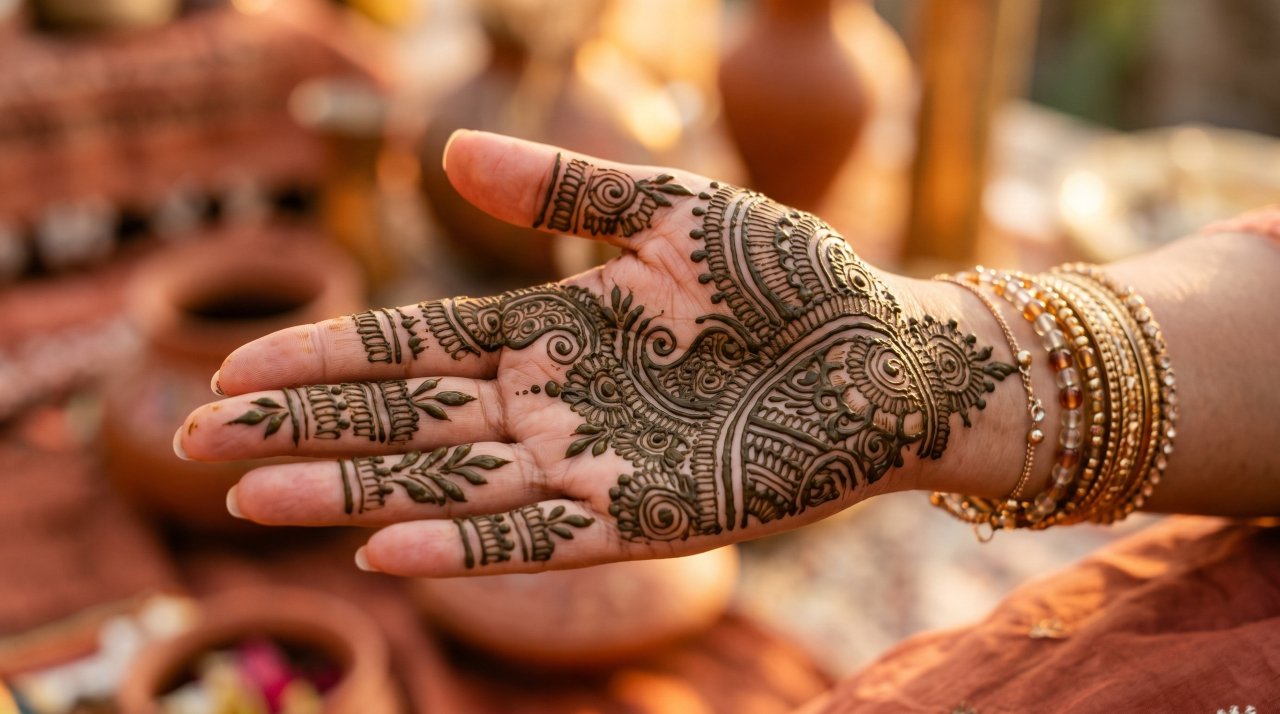
Over 1 billion people use henna every year, yet most of them have no idea how long it actually lasts. Some expect it to stay for months. Others are surprised when it fades in less than two weeks. The truth is, henna duration depends on where you put it, what type you use, and how well you take care of it after application.
Henna is used in three main ways: on skin as temporary body art, on hair as a natural dye, and on nails as a color treatment. Each one behaves differently. Skin henna fades as your skin sheds. Hair henna stays until the hair grows out. Nail henna moves with nail growth.
This guide answers every question you have about how long henna lasts. You will also learn what makes it fade faster and exactly what to do to keep it looking rich and dark for as long as possible.
What Is Henna and How Does It Work?
Henna comes from a plant called Lawsonia inermis. The leaves are dried and ground into a fine powder, then mixed into a paste with water, lemon juice, or tea. That paste is applied directly to skin, hair, or nails.
The active compound in henna is called lawsone. It binds to a protein called keratin, which is found in your skin, hair, and nails. This is why henna is not a surface paint. It actually soaks into the outer layers of your skin and bonds there.
That binding process is also why henna cannot be washed off easily. It stays until the skin itself sheds. The color starts as an orange tone right after removal and darkens to a warm brown within 24 to 72 hours through a natural process called oxidation. Body heat speeds up that darkening.
How Long Does Henna Last on Skin?
On skin, henna typically lasts between 1 and 3 weeks. That range is wide because it depends heavily on where the henna is applied on your body.
Body part breakdown:
- Palms and soles of feet: 2 to 4 weeks. These areas have the thickest skin and the most keratin. Color goes in deep and fades slowly.
- Hands and fingers: 1 to 3 weeks. Still a high-keratin area, but the constant movement and washing speeds up fading.
- Arms and legs: 1 to 2 weeks. Thinner skin and faster cell turnover means the color lifts off sooner.
- Neck, chest, or back: 5 to 10 days. Skin here is thin and delicate. Henna fades the fastest on these areas.
The reason location matters so much is simple. Your skin is always shedding. Skin cells on the surface die and fall off every day. The thicker the skin, the more layers henna can bond with, and the longer it takes for the stained cells to shed.
Fresh henna comes off orange. Do not worry about that. The real color shows up 2 to 3 days after removal. That is the darkest point, and it fades gradually from there. Keeping your skin moisturized slows the fading during that process.
Recommended read: American Academy of Dermatology — Skin Care Basics
Why Does Henna Fade Faster on Some People?
This is the question most people ask after their henna fades sooner than expected. The answer usually comes down to habits and skin condition, not the henna itself.
Things that make henna fade faster:
- Washing hands frequently, especially with hot water
- Swimming in chlorinated or salt water
- Using harsh soaps or body washes with sulfates
- Scrubbing or exfoliating the area where henna is applied
- Wearing tight clothing over the design, which causes friction
Things that make henna last longer:
- Leaving the paste on for 6 to 8 hours minimum before removal (overnight gives the deepest stain)
- Applying a sugar and lemon juice mixture over the wet paste to keep it moist and help it absorb
- Avoiding water for at least 12 hours after removing the paste
- Moisturizing the design daily with an oil-based product after removal
- Wearing gloves while washing dishes or doing housework
Your skin type also plays a role. Oily skin tends to push out the dye faster. Very dry skin sheds quickly, which also speeds up fading. Normal skin tends to hold color the longest. If your skin runs dry, moisturizing twice a day after henna application makes a real difference.
How Long Does Henna Last on Hair?
Henna on hair works completely differently from henna on skin. Hair does not shed the way skin does. Once henna bonds to the hair shaft, it stays there until the hair is cut or grown out.
For most people, that means henna hair color lasts several months on the actual hair. New growth at the roots will show your natural color, so touch-ups are needed every 4 to 6 weeks if you want even color from root to tip.
Henna bonds to keratin in the hair shaft and wraps around it. This is why henna does not just color hair, it also strengthens it. Many people notice thicker-feeling, shinier hair after henna application. The color result is usually a red to auburn shade, though mixing henna with indigo powder can produce brown or black tones.
One important thing to know: chemical dye does not always work well over henna. The henna coating on the hair can block chemical dye from penetrating. If you plan to switch from henna to chemical dye later, be aware that the transition may not be smooth. It is worth researching this before committing to henna as a long-term hair routine.
Recommended read: Healthline — Henna Hair Dye
How Long Does Henna Last on Nails?
Henna on nails is less common in Western countries but has been practiced for centuries in South Asian and Middle Eastern cultures. The results are surprisingly long-lasting.
Nails contain keratin just like hair, so henna bonds to them in the same way. The color stays as long as the stained nail takes to grow out. Since nails grow about 3mm per month on average, the stained portion slowly moves toward the tip over time. The full effect can last 3 to 6 months before the stain fully grows out.
The color on nails is usually a rich orange to deep rust tone. No topcoat or sealer is needed. Applying a little oil regularly helps the color stay vibrant. Over time, the root area grows out showing your natural nail, and the henna section moves outward with the nail.
Simple Steps to Make Henna Last Longer
Getting great henna color is one thing. Keeping it as long as possible is another. These steps cover everything from prep to ongoing care.
Before application:
Exfoliate your skin lightly the day before to remove dead cells from the very top layer. This lets henna bond to fresher skin underneath, which takes longer to shed. On the day of application, make sure your skin is clean and completely free of lotion or oil, as these create a barrier that blocks absorption.
During application:
Let the paste sit on your skin for as long as possible. Six hours is the minimum. Overnight gives the richest, darkest result. As the paste starts to dry on your skin, apply a thin coating of sugar mixed with lemon juice using a cotton ball. This keeps the paste moist and encourages deeper stain penetration.
Right after removal:
Scrape the paste off with the edge of a spoon or your fingers. Do not wash it off with water. Washing too soon dilutes the stain before it has fully oxidized. Wait at least 12 hours before the area gets wet. As soon as the paste is off, rub a small amount of coconut oil or olive oil into the design to protect it.
Ongoing care:
Moisturize the design every day with an oil-based cream or natural oil. Skip exfoliating soaps over the area. Use gloves when swimming or doing the dishes. Reapply oil whenever the design looks dry or starts to look patchy.
Black Henna Is Not Real Henna — Here Is What to Know
If you have ever seen jet-black henna at a market, festival, or tourist area, it was not real henna. Natural henna cannot produce a black stain. It always stains in shades of orange, rust, and brown.
Black henna uses a chemical called PPD, which stands for para-phenylenediamine. PPD is a synthetic dye that causes the black color. It can cause severe skin reactions including chemical burns, blistering, scarring, and long-term skin sensitivity. These reactions are not rare. They happen to many people, including children.
The danger is real and worth taking seriously. If someone offers you henna that claims to turn black within minutes, say no. Always ask what is in the paste before agreeing to any henna application, especially at outdoor stalls or tourist destinations where the source of the paste is unknown.
Health warning: NHS — Black Henna Warning
Common Questions About Henna Duration
Does henna last longer on dark or light skin? The color shows up more clearly on lighter skin, but the actual duration is about the same for both. What affects how long henna lasts is skin thickness and body location, not skin tone.
Can you make henna come off faster? Yes. Soaking in chlorinated water, scrubbing with an exfoliant, or applying a baking soda paste to the area will speed up fading. Lemon juice applied repeatedly also lightens the stain over time.
Why did my henna come off orange instead of brown? Fresh henna always comes off orange. The stain deepens to its true brown color over 48 to 72 hours through oxidation. Staying warm and keeping the area covered speeds up that darkening.
Does henna expire? Yes, henna paste does expire. Fresh paste gives the strongest color. Pre-made cones can be frozen and used within 1 to 2 years, but old or poorly stored henna will give weak, uneven results. Always check for a fresh, earthy smell. Henna that smells off or has separated should not be used.
Is henna safe for pregnant women? Natural henna applied to hands and feet is generally considered low risk during pregnancy. Black henna should be avoided entirely. Checking with a doctor before any application is the safest approach, especially during the first trimester.
Does henna stain differently on men versus women? Gender matters less than skin type and location. Men with thick skin on the palms can actually hold henna color very well. Hormonal differences might affect skin oil production, which can influence fading speed, but this varies person to person.
Final Thoughts on How Long Henna Lasts
Henna is temporary, but it does not have to fade fast. On skin, you can expect 1 to 3 weeks depending on where it is placed and how well you care for it. On hair, it lasts until the hair grows out, making it a semi-permanent commitment. an nails, the stain moves with nail growth and can stay visible for several months.
The biggest factor in all of this is aftercare. Leaving the paste on long enough, keeping the area dry for 12 hours after removal, and moisturizing daily will extend your henna significantly compared to doing none of those things.
Always choose natural henna from a trusted source. Avoid black henna completely. Ask questions before any application, especially at festivals or markets where the paste ingredients are unknown.
If you found this guide useful, save it before your next henna session. Share it with someone who is trying henna for the first time. And if you have a tip that made your henna last longer, drop it in the comments below.

