
Over 2 million people searched for permanent jewelry in 2023 alone, and the number keeps climbing every year. This is not just another passing trend. It is a genuinely different way to wear jewelry, and millions of people love it for good reason. If you have seen someone wearing a delicate gold chain with no clasp and wondered how it stays on, this article is for you. We will cover exactly what permanent jewelry is, how it works, what it costs, and whether it is the right choice for you.
What Is Permanent Jewelry, Exactly?
Permanent jewelry is a fine chain or band, usually made of gold or sterling silver, that is welded shut around your wrist, ankle, or neck. There is no clasp. It does not snap open or closed. It stays on your body until you physically cut it off.
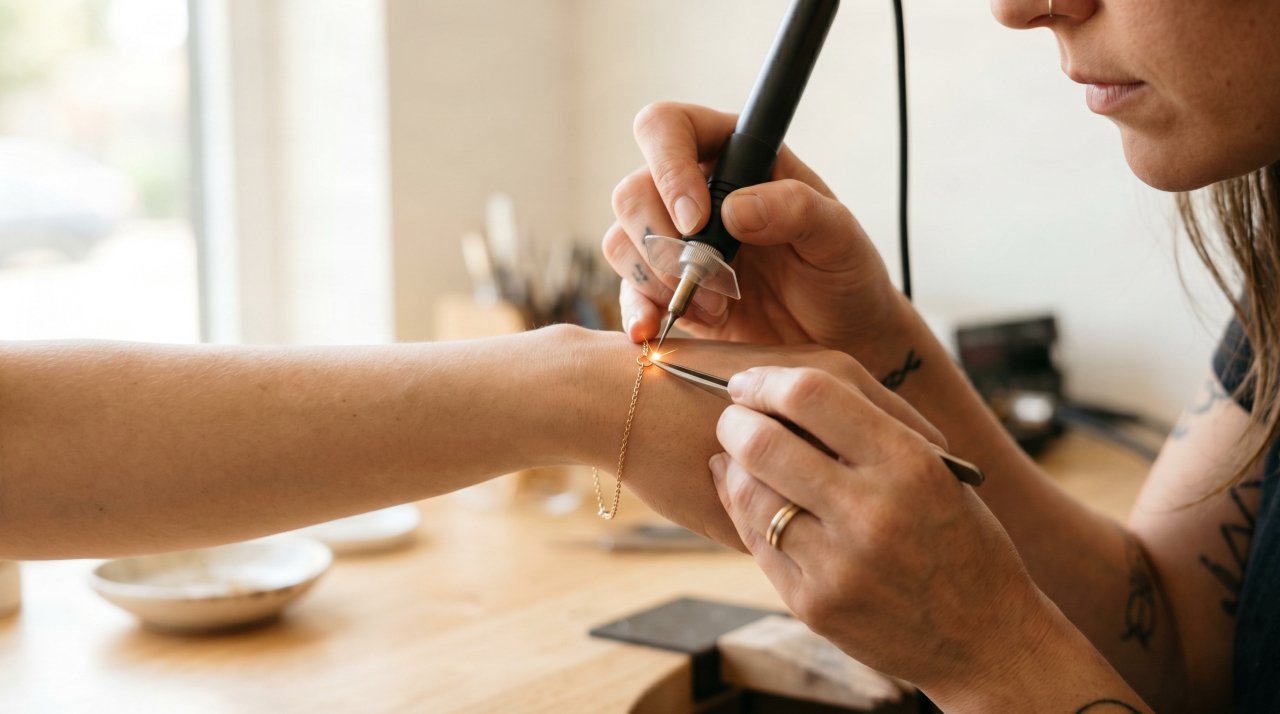
The welding is nothing like what you picture in a factory. A jeweler uses a small handheld pulse arc welder to fuse the two ends of the chain together in a fraction of a second. The tool creates a tiny, precise spark that bonds the metal. Most people say they feel absolutely nothing during the process.
This style of jewelry exploded in popularity around 2021 and 2022, driven largely by TikTok videos showing the welding moment. Searches for permanent bracelets and permanent jewelry near me shot up almost overnight. Right now, standalone permanent jewelry studios exist in most major cities across the US, UK, Canada, and Australia.
How Does the Welding Process Work?
The process is simple and fast. Most appointments take between 15 and 30 minutes. Here is what happens, step by step:
- You choose your chain style and metal type from the studio’s selection.
- The jeweler sizes the chain around your wrist, ankle, or neck to get the right fit.
- They place a small connector link at the two open ends of the chain.
- A jeweler uses a small handheld tool that works on the pulse arc welding process to fuse the two ends of the chain together in a fraction of a second.
- The jeweler checks the weld and gently polishes the spot so it looks clean.
The welder never makes contact with your skin. A small protective guard is placed between the tool and your body during that one-second spark. Most people say they did not feel a thing. There is no pain, no recovery time, and no aftercare steps needed before you walk out.
What Metals Are Used for Permanent Jewelry?
The metal you choose affects both the look and how long your jewelry lasts. Most studios offer three main options.
Solid gold, usually 14k or 18k, is the most popular choice. It is durable, does not tarnish, and is safe for people with sensitive skin or metal allergies. Solid gold costs more upfront, but it holds up the best over years of daily wear. If you are not sure which karat is right for you, read this guide on the difference between 14k and 18k gold before you book.
Gold fill is a budget-friendly middle ground. It has a thick layer of real gold bonded over a base metal core. It looks identical to solid gold and lasts well, but it can wear down faster if exposed to harsh chemicals or rough daily conditions.
Sterling silver is the most affordable option and has a clean, bright look. The downside is that silver can tarnish over time, especially with regular water exposure. It may also react with some skin types, leaving a slight greenish tint. Most studios use only quality metals because cheap or plated options do not weld cleanly.
How Much Does Permanent Jewelry Cost?
Cost depends on your metal choice, chain style, and the studio’s location. Here is a general breakdown:
| Metal Type | Approximate Price Range |
|---|---|
| Sterling Silver | $20 to $50 |
| Gold Fill | $30 to $100 |
| Solid 14k Gold | $75 to $300+ |
The price usually covers the chain, the welding service, and a basic connector link. Some studios charge a flat welding fee plus a per-inch price for the chain. Others bundle it all together. Adding charms or decorative connectors increases the cost. Always ask what is included before you book.
How Long Does Permanent Jewelry Last?
A solid gold permanent bracelet, welded properly, can last for years. Many people wear theirs every single day for two or three years without any issues. Gold fill options are also quite durable with normal care. Sterling silver tends to show wear faster, especially with heavy water exposure.
The weakest point on any permanent jewelry piece is the weld itself. A studio that rushes the weld or uses low-quality metal will produce a join that breaks within weeks. This is why choosing a reputable studio matters far more than finding the cheapest price in your area.
If your chain ever does break at the weld, most good studios will reweld it for free or at a very low cost. Daily activities like showering, swimming, and working out are totally fine. That is one of the biggest reasons people love permanent jewelry in the first place.
Can You Remove Permanent Jewelry?
Yes, and it is easy. The word “permanent” refers to the fact that it has no clasp, not that it is stuck on you forever. To remove it, you simply use a small pair of scissors or wire cutters to snip the chain. The whole thing takes five seconds and there is no pain involved.
If you want to keep the chain after removing it, go back to the studio. A jeweler can cut it cleanly and add a clasp so you can wear it as a traditional bracelet. Many people choose this route if they need to remove it for medical reasons or a job that requires no jewelry.
There is no procedure. No doctor. No special equipment. Just a small cut, and it is off.
Is Permanent Jewelry Safe?
For most people, permanent jewelry is completely safe. The welding tool never touches your skin. During the one-second spark, the jeweler places a small metal guard between the welder and your body, so there is zero direct contact.
People with metal allergies should choose solid 14k or 18k gold, or ask about platinum options if available. Avoid gold fill and sterling silver if you know your skin reacts to non-precious metals. Solid gold is hypoallergenic for the vast majority of people. People with sensitive skin should be aware of metal allergies and jewelry reactions before choosing their chain material, and solid gold is almost always the safest option.
A few situations call for extra caution. MRI machines use powerful magnetic fields, and any metal near your body should be removed before a scan. Permanent jewelry needs to come off before an MRI, which means snipping it first. Most doctors and imaging centers will ask you to remove all jewelry beforehand. If you get MRIs regularly, permanent jewelry may not be the most practical choice for you.
Permanent Jewelry vs. Regular Jewelry: What Is the Difference?
The most obvious difference is the clasp. Regular jewelry opens and closes whenever you want. Permanent jewelry does not. That single difference changes the entire experience of wearing it.
Regular jewelry can shift, slide off, or get lost. Most people have lost a favorite bracelet or necklace because the clasp broke or came undone at the wrong moment. Permanent jewelry eliminates that problem completely. You put it on once and it stays.
The design of permanent jewelry also tends to be more minimal. Fine, delicate chains are the most common style because they sit flat against the skin and are comfortable to wear 24 hours a day. There are no bulky closures or decorative clasps. The chain itself is the piece.
Care is about the same for both types. A soft cloth and a drop of mild soap in warm water keeps permanent jewelry clean. The main difference is that with regular jewelry, you might forget it in a drawer for months. With permanent jewelry, you are always wearing it, so light cleaning once a week is a good habit.
Who Is Permanent Jewelry For?
Permanent jewelry works best for people who want a low-maintenance option they never have to think about. If you are the type who loses jewelry, hates fumbling with clasps, or just wants something simple on your wrist every day, it is a great fit.
It is also deeply popular as a symbolic piece. Best friends get matching permanent bracelets. Couples choose it over rings for casual commitment jewelry. Mothers and daughters get them together. The no-clasp design adds a layer of meaning, since you have to make a conscious choice to cut it off.
Active people love it too. Swimmers, gym-goers, and outdoor workers appreciate wearing jewelry that survives sweat, water, and rough conditions without needing to be removed. It is genuinely set-it-and-forget-it.
Permanent jewelry is not ideal for everyone. Medical professionals and some athletes who must remove jewelry for work will find it inconvenient. People who get frequent MRIs should also think carefully before committing.
How to Take Care of Your Permanent Jewelry
The good news is that permanent jewelry needs very little care. A quick rinse with warm water and a small drop of mild dish soap once a week keeps it looking good. Use a soft cloth to pat it dry after showers or swimming.
Avoid prolonged exposure to bleach, chlorine, or strong cleaning chemicals. A quick swim in a pool is fine, but soaking in a chlorinated hot tub for hours repeatedly will dull gold fill and silver over time. Solid gold handles this better than other metals.
If your chain starts to feel discolored or your skin turns slightly green beneath it, the metal is likely reacting with your skin chemistry. This is more common with gold fill or sterling silver. Switching to solid gold usually solves the issue completely. Check the weld spot every few weeks to make sure it still looks tight and clean.
What to Expect at Your Appointment
Walk in dressed comfortably. If you are getting an anklet, wear shorts, a skirt, or pants you can roll up easily. For a wrist bracelet, any outfit works. You do not need to do anything special to prepare.
When you arrive, you will browse the studio’s chain selection and pick your metal type, chain weight, and any charms or connectors you want to add. The jeweler will then measure the chain against your wrist or ankle to get the right fit. Once you are happy with the sizing, the welding takes about one second. The whole appointment is done in 15 to 30 minutes.
Group appointments are extremely popular. Many studios offer bookings for birthday groups, bachelorette parties, and friend get-togethers. Some studios charge a minimum group fee for these events, so ask when you book.
Common Questions About Permanent Jewelry
Does it set off metal detectors? Usually not. The chains are very fine and lightweight. Some high-sensitivity detectors may flag it, but airport and venue detectors typically do not react.
Can you sleep in it? Yes. That is the whole point. Most people forget it is there within a few days.
Can it stretch? Fine chains can loosen slightly over time as the links settle. A jeweler can tighten a loose weld or replace a single link if needed.
Can kids get permanent jewelry? Most studios require clients to be 18 or have a parent present and consenting. Policies vary by studio, so check before booking.
Final Thoughts
Permanent jewelry is exactly what it sounds like: a welded, clasp-free chain that stays on until you choose to cut it off. It comes in solid gold, gold fill, and sterling silver. It is safe, simple to remove when needed, and built for real daily life. The appeal is not complicated. You put it on once, and it is just there, day after day, looking clean and effortless.
If you are ready to try it, search for a permanent jewelry studio near you and book an appointment. Take a friend along if you want to make it a shared experience. And if you want to read more about choosing the right jewelry for everyday wear, check out our other guides on fine jewelry care and the best metals for sensitive skin.

